50 Cents - Elizabeth II Decimal Pattern (1961)
Circulating version: 1961 1 Cent - Elizabeth II Decimal Pattern
| Country | United Kingdom |
| Year | 1961 |
| Denomination | 50 Cents |
| Face value | 50p |
| Mint | Royal Mint · Llantrisant |
| Circulation | Non-circulating |
| Composition | Silver |
| Weight | 7.500g |
| Diameter | 26.0mm |
| Shape | Round |
| Edge | Lettered: PATTERN DECIMAL COINAGE |
| Rev. artist | William Wyon (Una and the Lion design of 1839, adapted) |
| Grade scale | UK (EF/UNC) |
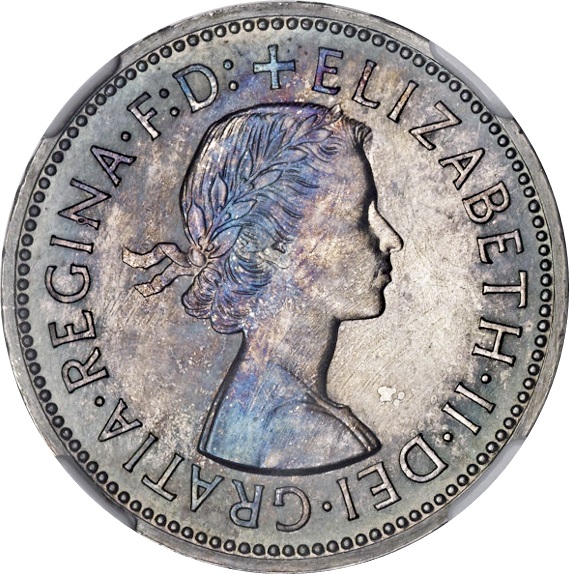
Young laureate bust of Queen Elizabeth II facing right, legend around.
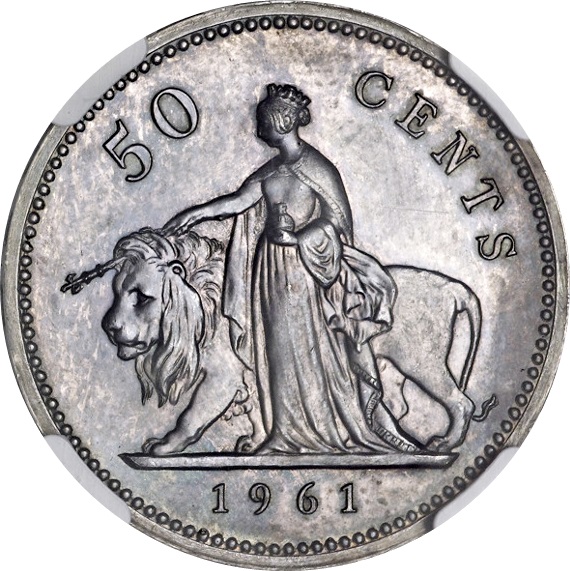
Image of Una and the lion with denomination above and date in exergue.
Find this on eBay
Affiliate50 Cents - Elizabeth II Decimal Pattern price history
Daily limit reachedAbout the 1961 50 Cents - Elizabeth II Decimal Pattern
The 1961 50 Cents - Elizabeth II Decimal Pattern is a collector 50 cents coin, struck in silver. It weighs 7.5g and measures 26mm across. Reverse design: Image of Una and the lion with denomination above and date in exergue.
Common questions
How much is the 1961 50 Cents - Elizabeth II Decimal Pattern worth?
No verified sale of the 1961 50 Cents - Elizabeth II Decimal Pattern has been logged on MyCoinage yet. Its silver content is worth up to £9.66 at today's spot price, which puts a floor under its value.
Was the 1961 50 cents ever legal tender in Britain?
No. It is a pattern, struck to show a committee what decimal coins might look like. Britain never adopted cents: the Royal Mint notes that the historic names pound and penny were kept for the decimal coinage.
How many 1961 decimal pattern sets exist?
No official figure has been published. London Coins, describing a cased six-coin set from 50 cents to one cent in 2022, said only two to five sets are believed to exist. Single pieces are therefore very seldom offered.
Why is the pattern dated 1961?
The Decimal Coinage Committee under the Earl of Halsbury was appointed in December 1961. London Coins says the coins themselves were struck in the winter and spring of 1962 to 1963 and shown at the committee's meetings by the Deputy Master of the Mint, J. H. James.
What is the design on the 1961 50 cents?
The reverse shows Una and the Lion, a design borrowed from the 1839 gold five pounds of Queen Victoria, which Wikipedia credits to William Wyon. The coin is struck in silver and its edge reads PATTERN DECIMAL COINAGE.
How is the 1961 50 Cents - Elizabeth II Decimal Pattern different from the circulating coin?
This is a collector version of the 1961 1 Cent - Elizabeth II Decimal Pattern, not the coin found in change. At 7.5g of silver it is heavier than the 2.91g copper circulating coin, so weighing it is the quickest check.
How do I identify the 1961 50 Cents - Elizabeth II Decimal Pattern?
Check the weight 7.5g and diameter 26mm and the metal (silver) against the specification table on this page. The reverse design is described above.
History and design
This silver 50 cents is a pattern, not a coin that was ever issued. In 1961 the government set up a Committee of Inquiry on decimal currency under the Earl of Halsbury, which the Royal Mint says was asked not whether Britain should decimalise but how the change should be made. This pattern shows one answer the Mint tried: a coinage in cents.
London Coins, describing a cased set sold in 2022, says the patterns were struck in the winter and spring of 1962 to 1963 for the committee, appointed in December 1961, and that the Deputy Master of the Mint, J. H. James, showed them at its meetings. The set ran from this 50 cents down to a bronze one cent, and London Coins believed only two to five sets exist. No mintage has been published.
The reverse revives Una and the Lion, the design of the 1839 gold five pounds of Queen Victoria, which Wikipedia credits to William Wyon. The other silver and cupro-nickel pieces in the set also borrowed older designs: a standing Britannia from the Edward VII florin and a lion on crown from the late George IV shilling and sixpence.
The coin is struck in silver, and its edge is lettered PATTERN DECIMAL COINAGE.
Collecting notes
The cents scheme was not adopted. The Royal Mint notes that the historic names pound and penny were kept, providing a link with the past, so these patterns survive as a record of a coinage that never was.
With so few sets known, the piece is almost never offered singly. Check that an example has the lettered edge PATTERN DECIMAL COINAGE described for the set, and look for a provenance through published auction records.
Sources
The history, design, varieties and collecting notes on this page are drawn from these sources. Prices come from recorded sales, not from them.
- Royal Mint Pattern Decimal Set 1961, Auction 178 lot 1244, London Coins (read 10 Oct 2026)
- The Decimal Debate, The Royal Mint (read 10 Oct 2026)
- Five pounds (gold coin), Wikipedia (read 10 Oct 2026)