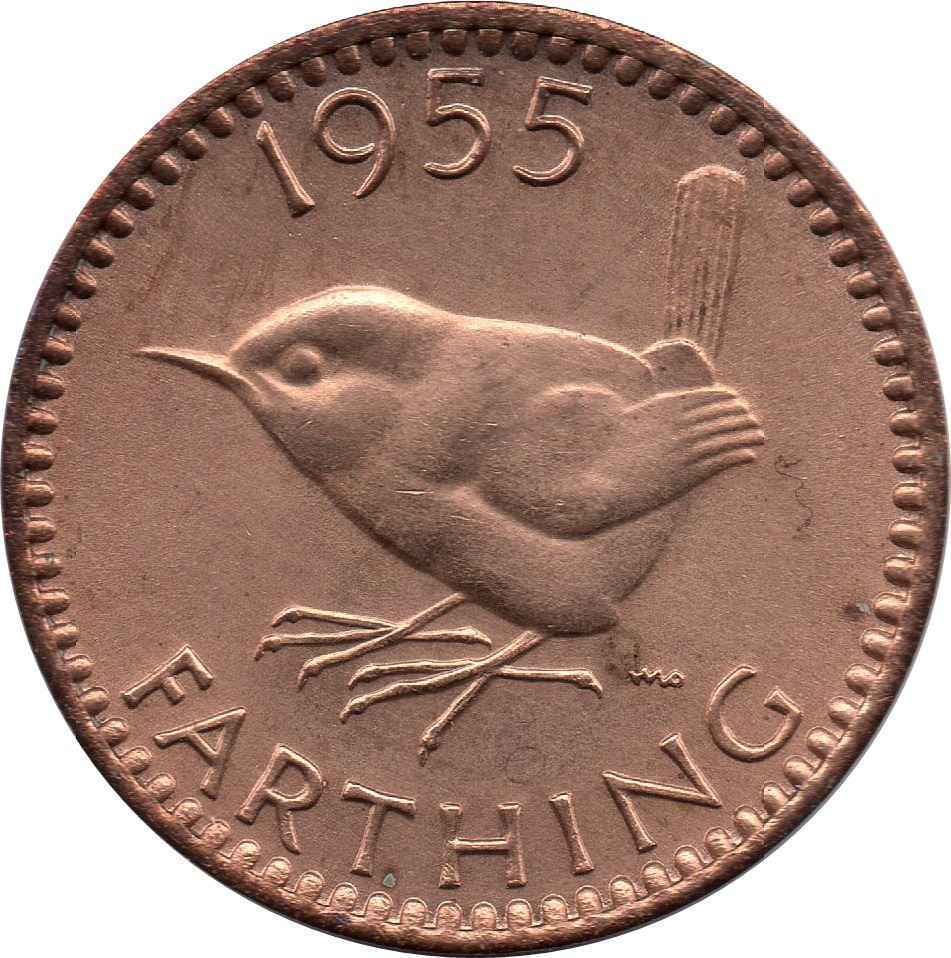
Common: 10,000,000 or more minted. Sells often: 123 verified sales in the last 12 months.
1 Farthing - George V (1911–1925)
| Country | United Kingdom |
| Year | 1911–1925 |
| Denomination | 1 Farthing |
| Mintage by year |
Scarcest year: 4,134,300 struck
|
| Mint | Royal Mint · Llantrisant |
| Circulation | Circulating |
| Demonetised | 1960 |
| Composition | Bronze |
| Weight | 2.830g |
| Diameter | 20.0mm |
| Thickness | 1.30mm |
| Shape | Round |
| Edge | Plain |
| Orientation | Medal alignment ↑↑ |
| Obv. artist | Bertram Mackennal, Edgar Bertram MacKennal |
| Rev. artist | Leonard Charles Wyon |
| Grade scale | UK (EF/UNC) |
| Tags | Armour Sea Cross |
Uncrowned portrait of King George V left, legend around.
GEORGIVS V DEI GRA: BRITT: OMN: REX FID: DEF: IND: IMP:
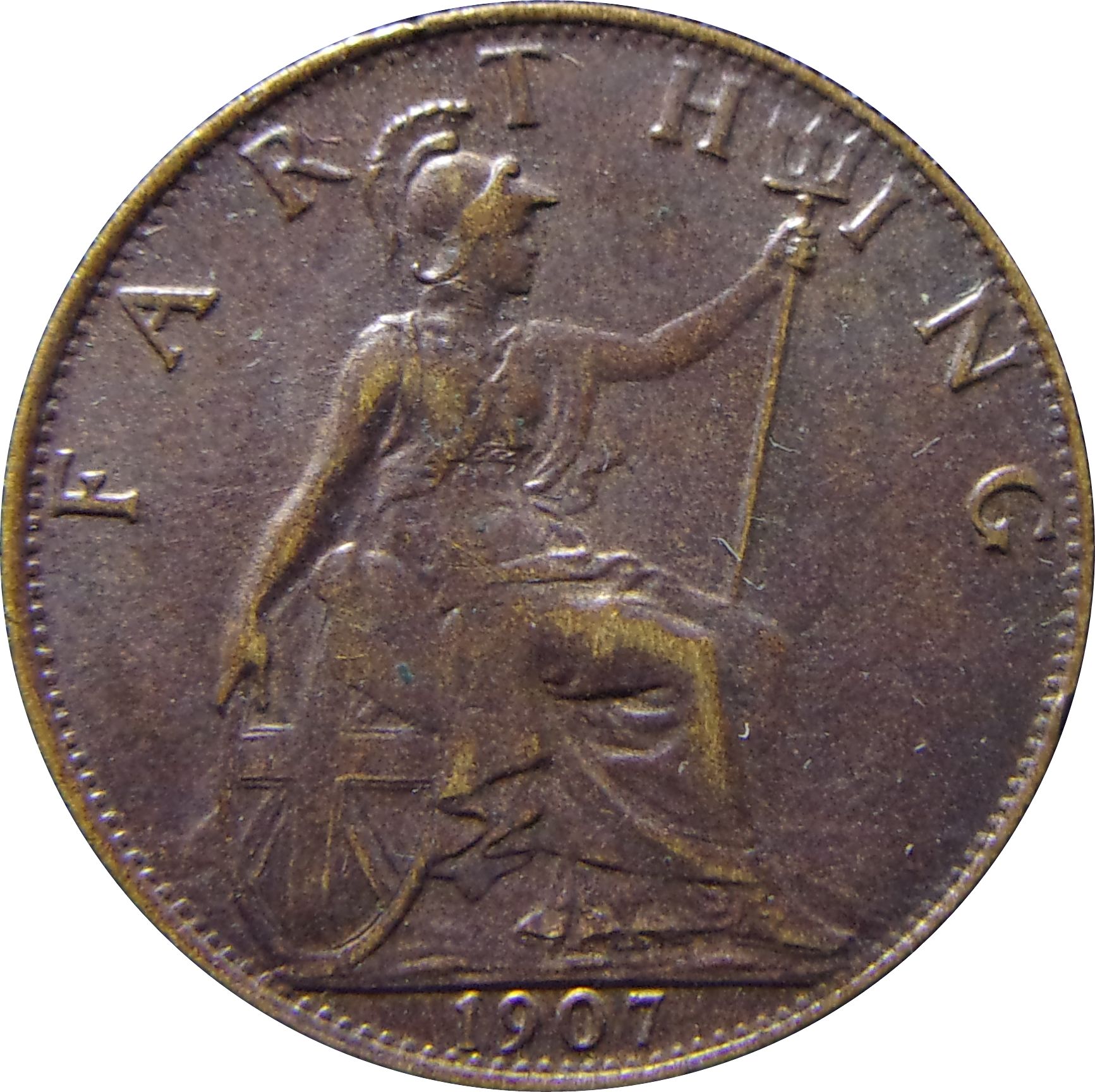
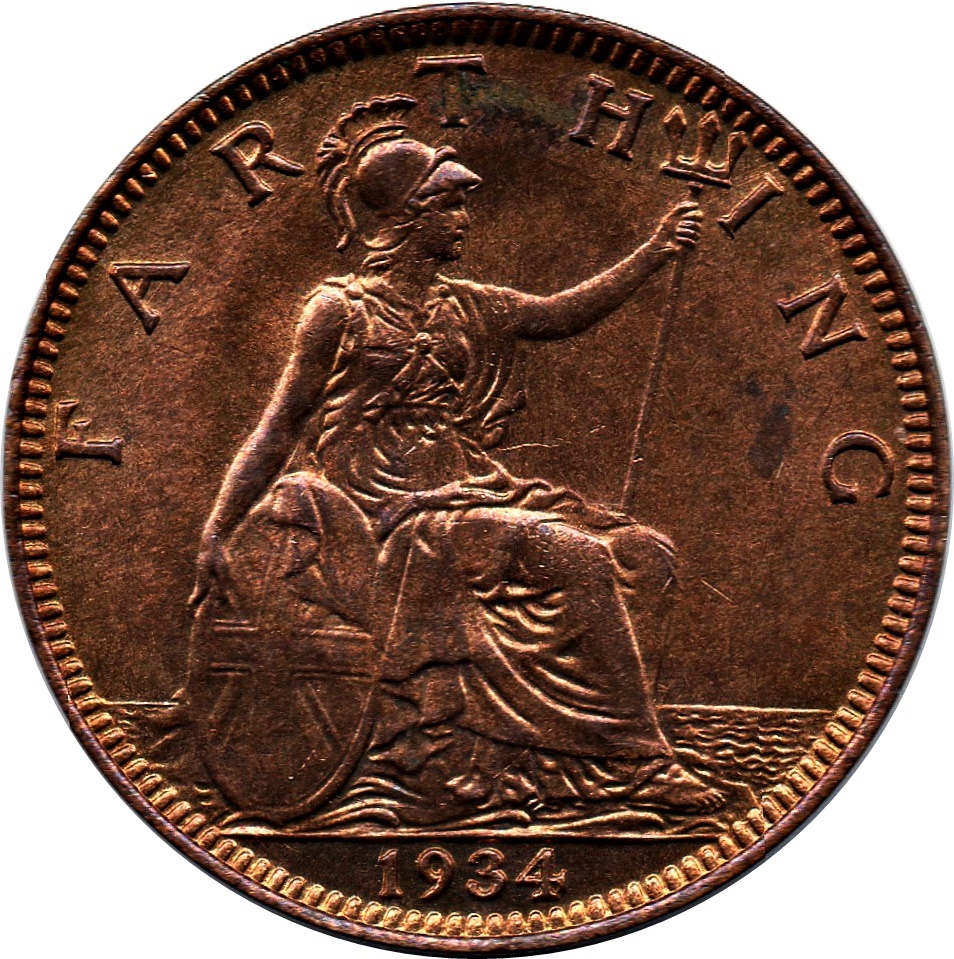
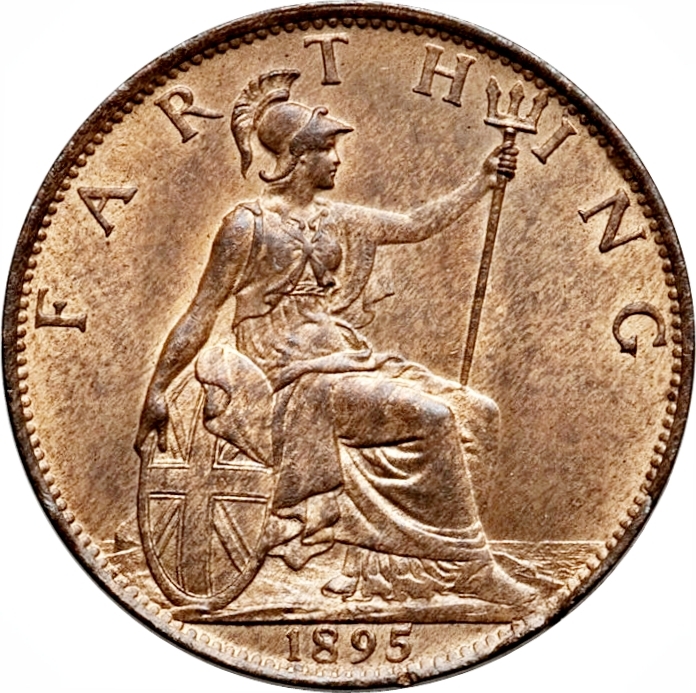
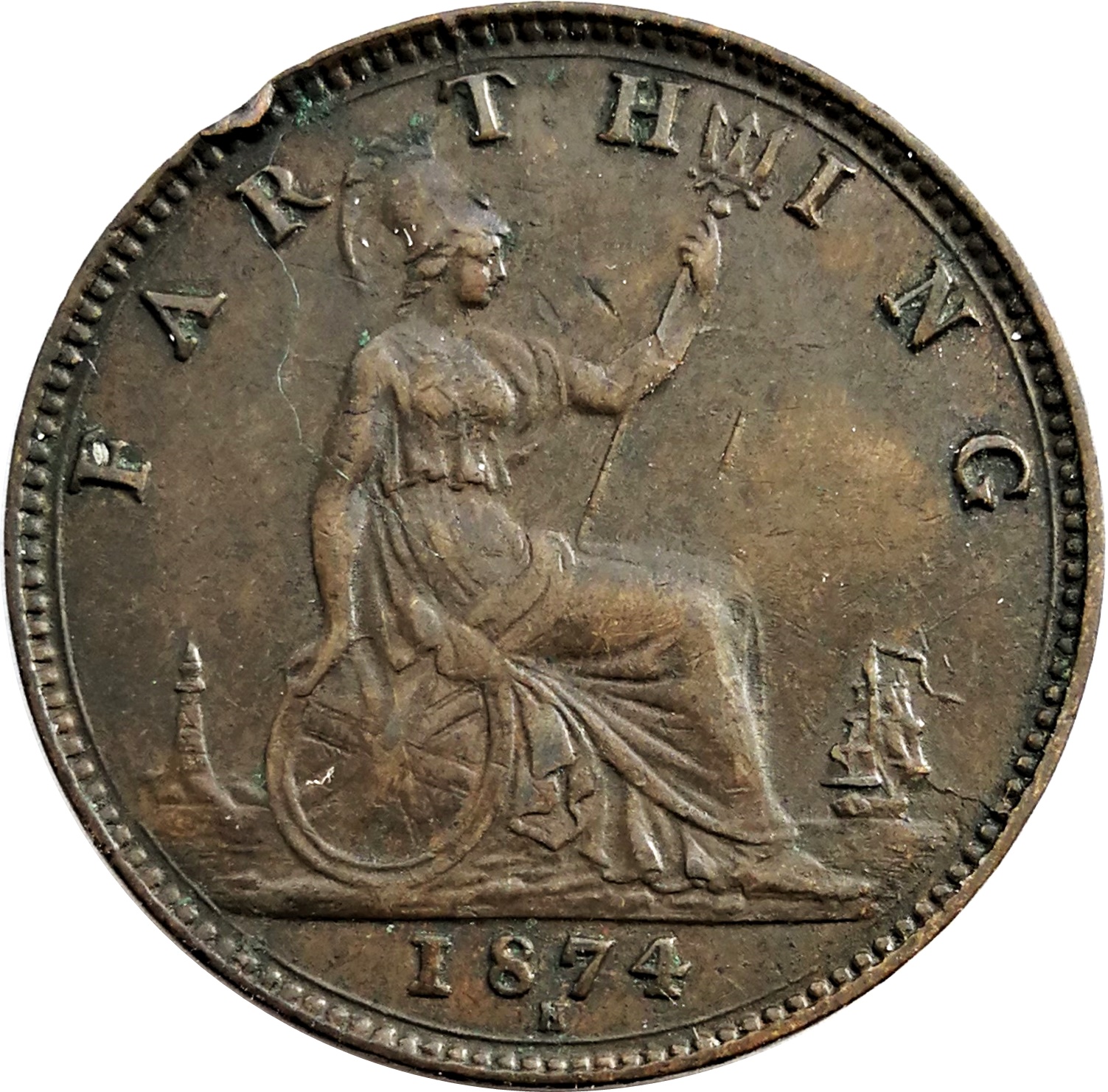
Seated figure of Britannia facing right, trident in left hand, shield with Union flag in right, denomination above, sea behind, date in exergue.
FARTHING
1 Farthing - George V market value
Find this on eBay
Affiliate1 Farthing - George V price history
Daily limit reached1 Farthing - George V value by year
1911 to 1925 · median sold prices| Year | Mintage | Circulated | Uncirculated | Sales | |
|---|---|---|---|---|---|
| 1911 | 5,196,800 | £3.03 | £8.75 | 38 | |
|
VF£12.50EF£28.00UNC£95.00
⭐ Pro: the 1911 coin's sales by grade, and the chart filtered to one year
Start 7-day free trial
|
|||||
| 1912 | 7,669,700 | £2.24 type | £7.88 type | ||
| 1913 scarcest | 4,134,300 | £2.24 type | £7.88 type | ||
| 1914 | 6,126,900 | £2.24 type | £7.88 type | ||
| 1915 | 7,129,200 | £2.24 type | £7.88 type | ||
| 1916 | 10,993,300 | £2.00 | £13.55 (1) | 9 | |
|
VF£12.50EF£28.00UNC£95.00
⭐ Pro: the 1916 coin's sales by grade, and the chart filtered to one year
Start 7-day free trial
|
|||||
| 1917 | 21,434,800 | £1.91 | £3.95 | 24 | |
|
VF£12.50EF£28.00UNC£95.00
⭐ Pro: the 1917 coin's sales by grade, and the chart filtered to one year
Start 7-day free trial
|
|||||
| 1918 | 19,362,800 | £3.83 | £9.67 (2) | 16 | |
|
VF£12.50EF£28.00UNC£95.00
⭐ Pro: the 1918 coin's sales by grade, and the chart filtered to one year
Start 7-day free trial
|
|||||
| 1919 | 15,089,400 | £2.42 | £14.33 (1) | 11 | |
|
VF£12.50EF£28.00UNC£95.00
⭐ Pro: the 1919 coin's sales by grade, and the chart filtered to one year
Start 7-day free trial
|
|||||
| 1920 | 11,480,500 | £2.99 | £7.88 type | 9 | |
|
VF£12.50EF£28.00UNC£95.00
⭐ Pro: the 1920 coin's sales by grade, and the chart filtered to one year
Start 7-day free trial
|
|||||
| 1921 | 9,469,000 | £2.24 type | £7.88 type | ||
| 1922 | 9,956,900 | £2.24 type | £7.88 type | ||
| 1923 | 8,034,400 | £2.24 type | £7.88 type | ||
| 1924 | 8,733,400 | £2.24 type | £7.88 type | ||
| 1925 | 12,634,600 | £2.03 | £6.00 (1) | 17 | |
|
VF£12.50EF£28.00UNC£95.00
⭐ Pro: the 1925 coin's sales by grade, and the chart filtered to one year
Start 7-day free trial
|
|||||
One row for each year the 1 Farthing - George V was struck. Prices are medians of verified sold listings matched to that year from the listing: circulated is worn condition up to Extremely Fine, uncirculated is About Uncirculated or better. A count in brackets means fewer than three sales behind the figure; a grey figure marked "type" is the median across every year, shown where that year has no sale of its own yet; years with no sales yet fill in as sales are recorded. Most types have been searched year by year only since October 2026, so later years are still filling in. Use the grade table below for a price by condition across all years.
1 Farthing - George V value by grade
Realised auction prices · ⭐ Pro Expand rows for individual sale records| Grade | Latest | Median | 30d Δ | All-time range | Sales (1yr) | Total sales | Last sale | |
|---|---|---|---|---|---|---|---|---|
| UNC | £3.95 🔒 eBay | £7.75 | – | £1.00 – £16.15 | 11 | 11 | 03-10-2026 | |
|
Loading…
|
||||||||
| EF | £3.30 🔒 eBay | £3.30 (1) | – | £3.30 – £3.30 | 1 | 1 | 15-07-2026 | |
|
Loading…
|
||||||||
| VF | £3.25 🔒 eBay | £2.69 | ▲34.5% | £0.42 – £17.20 | 109 | 110 | 16-10-2026 | |
|
Loading…
|
||||||||
| F | £2.99 🔒 eBay | £2.99 (1) | – | £2.99 – £2.99 | 1 | 1 | 08-08-2026 | |
|
Loading…
|
||||||||
| aUNC | £8.00 🔒 eBay | £8.00 (1) | – | £8.00 – £8.00 | 1 | 1 | 27-01-2026 | |
|
Loading…
|
||||||||
About the 1911 1 Farthing - George V
The 1911 1 Farthing - George V is a circulating 1 farthing coin issued from 1911 to 1925, struck in bronze. It weighs 2.83g and measures 20mm across. Reverse design: Seated figure of Britannia facing right, trident in left hand, shield with Union flag in right, denomination above, sea behind, date in exergue.
Mintage figures are recorded for 15 years between 1911 and 1925, 157,446,000 coins in all. 1913 is the scarcest date, with 4,134,300 struck. It is no longer legal tender (withdrawn 1960), so its value is to collectors only.
Common questions
How much is the 1911 1 Farthing - George V worth?
Verified sold prices for the 1911 1 Farthing - George V run from £2.69 to £8.00 across 5 grades, taking the median for each grade. Condition makes the difference, so check the grade table above before pricing one.
How many George V farthings were made from 1911 to 1925?
Coin Hunter and Wikipedia agree on 157,496,719 across the fifteen dates. Output peaked in the war years at 21,434,844 in 1917 and was lowest in 1913 at 4,184,320. Both references draw on standard catalogues, not on a Royal Mint list.
Which George V farthing of this type is the hardest to find?
By mintage, 1913, with 4,184,320 struck, followed by 1911. Tony Clayton notes that the earlier obverse found on some 1915 farthings is a great rarity, and that darkened 1918 farthings are rare, while bright 1918 coins are normal.
Why are some George V farthings dark?
New farthings were darkened at the Mint until 1918. Tony Clayton records that the practice stopped during that year as gold coins went out of use, so 1918 is known both darkened, which is rare, and bright. Later dates were issued bright.
Is a George V farthing still legal tender?
No. The Royal Mint Museum records that farthings were demonetised at the end of 1960, four years after the last one was struck in 1956. Wikipedia gives 1 January 1961 as the date the coin ceased to be legal tender.
How do I identify the 1911 1 Farthing - George V?
Check the weight 2.83g and diameter 20mm and the metal (bronze) against the specification table on this page. The reverse design is described above.
History and design
The George V farthing was made current by the proclamation of 28 November 1910, which took effect on 1 January 1911 and set new designs for the gold and bronze coins of the reign. The farthing, a quarter of a penny, kept its seated Britannia reverse and gained the new King's portrait.
It was struck every year from 1911 to 1925. Coin Hunter and Wikipedia agree on every date, totalling 157,496,719. Output more than doubled in the war, reaching 21,434,844 in 1917, while 1913 was the lowest date at 4,184,320. Wikipedia's penny history explains that small change was in heavy demand after the National Insurance Act of 1911 and through the war years.
In 1926 the portrait was modified and the reverse adjusted, which is why the catalogue treats the later farthings as a separate type.
The obverse is Bertram Mackennal's bare head of George V facing left, with GEORGIVS V DEI GRA: BRITT: OMN: REX FID: DEF: IND: IMP: around it. Mackennal won the design competition for the new coinage, and his initials B M sit on the truncation of the neck.
The proclamation describes the reverse as Britannia seated on a rock surrounded by the sea, her right hand holding a shield resting against the rock and her left hand grasping a trident, with FARTHING and the date. This is Leonard Charles Wyon's bronze Britannia of 1860, as simplified in 1895 when the lighthouse and ship were removed. The edge is plain.
Varieties and errors
Tony Clayton records two forms of the 1911 obverse, with and without a hollow at the back of the neck. In 1914 the spacing of GRA BRITT changed; both forms are equally common for 1914, but the earlier one on a 1915 farthing is a great rarity. 1918 exists darkened, which is rare, and bright.
Collecting notes
No date of this type is scarce by mintage, though 1913 and 1911 are the lowest. Clayton notes that farthings were darkened before issue until the practice ended during 1918. Check the neck on 1911 and the GRA BRITT spacing on 1914 and 1915.
The Royal Mint Museum notes that the farthing never circulated as freely as the halfpenny, and that it was demonetised at the end of 1960. The modified effigy farthing of 1926 to 1936 followed this type.
Sources
The history, design, varieties and collecting notes on this page are drawn from these sources. Prices come from recorded sales, not from them.
- Proclamation determining new designs for gold and bronze coins (London Gazette issue 28442, 29 November 1910, page 8941), The Gazette (read 10 Oct 2026)
- Farthing (British coin), Wikipedia (read 10 Oct 2026)
- Initials on British coins, TreasureRealm (read 10 Oct 2026)
- Coin values by year, George V (year pages 1911 to 1925, read one by one), Coin Hunter (read 10 Oct 2026)
- Halfpenny and farthing, Royal Mint Museum (read 10 Oct 2026)
- Farthings, Tony Clayton, Coins of the UK (read 10 Oct 2026)
- History of the British penny (1901 to 1970), Wikipedia (read 10 Oct 2026)
- 1925 George V Maundy Set, The Royal Mint (read 10 Oct 2026)
More 1 Farthing coins from nearby years