1 Crown - George III Pattern Silver (1817)
Circulating version: 1817 1 Sovereign - George III Pattern
| Country | United Kingdom |
| Year | 1817 |
| Denomination | 1 Crown |
| Face value | 25p |
| Mint | Royal Mint · Llantrisant |
| Circulation | Non-circulating |
| Composition | Silver |
| Weight | 36.000g |
| Shape | Round |
| Obv. artist | Benedetto Pistrucci |
| Rev. artist | Benedetto Pistrucci |
| Grade scale | UK (EF/UNC) |
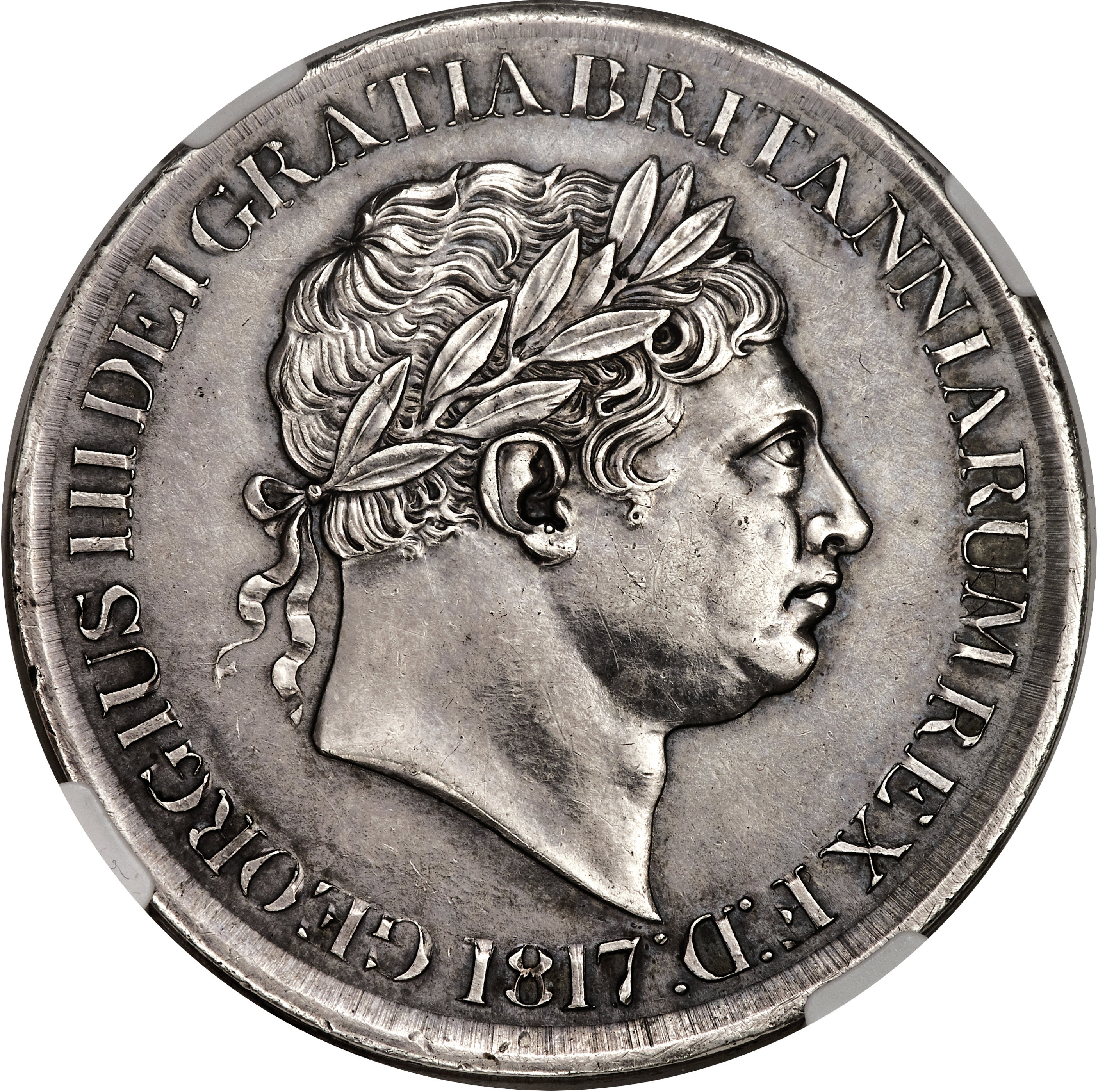
Laureate head of King George III right, legend around, date below.
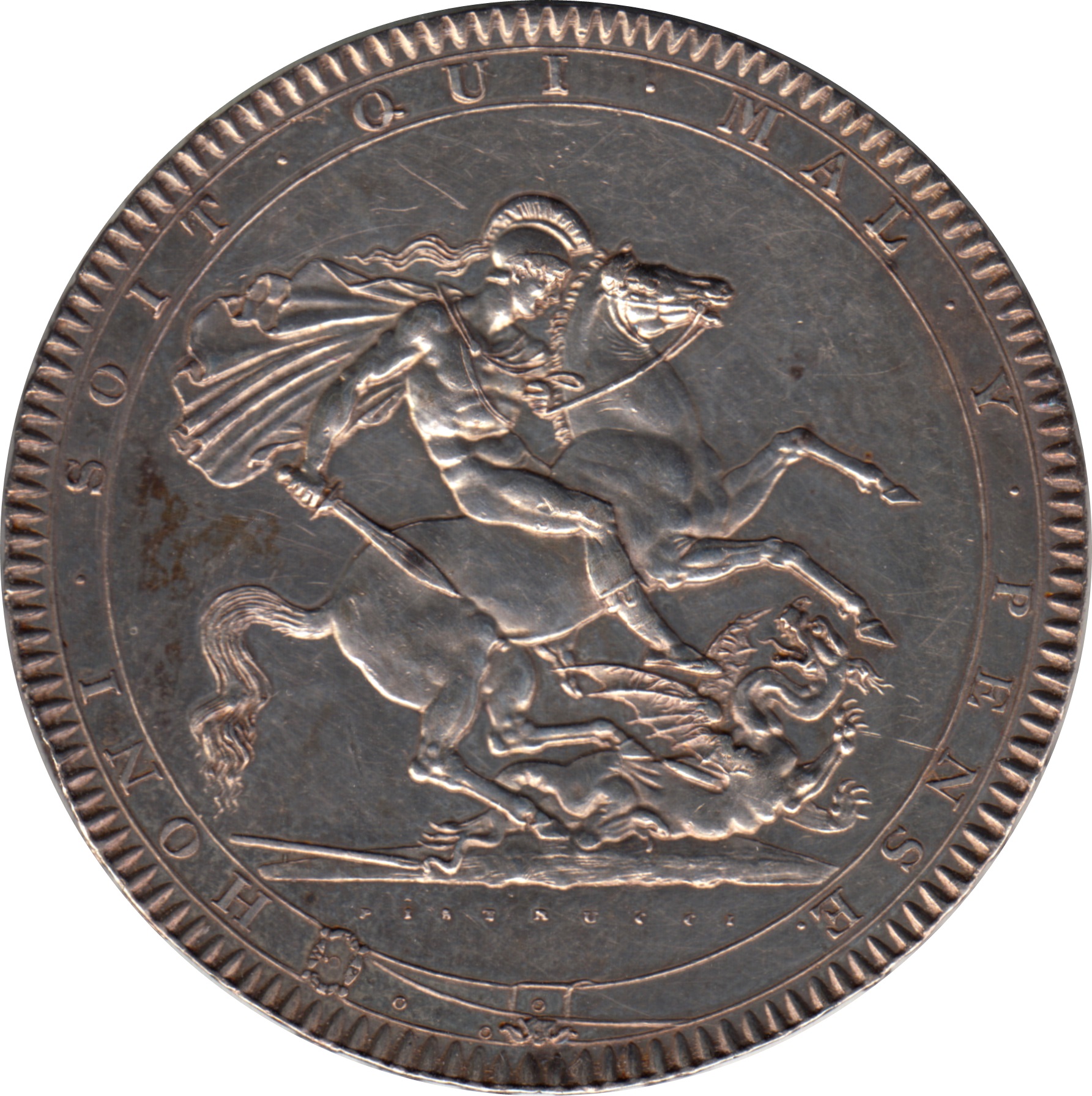
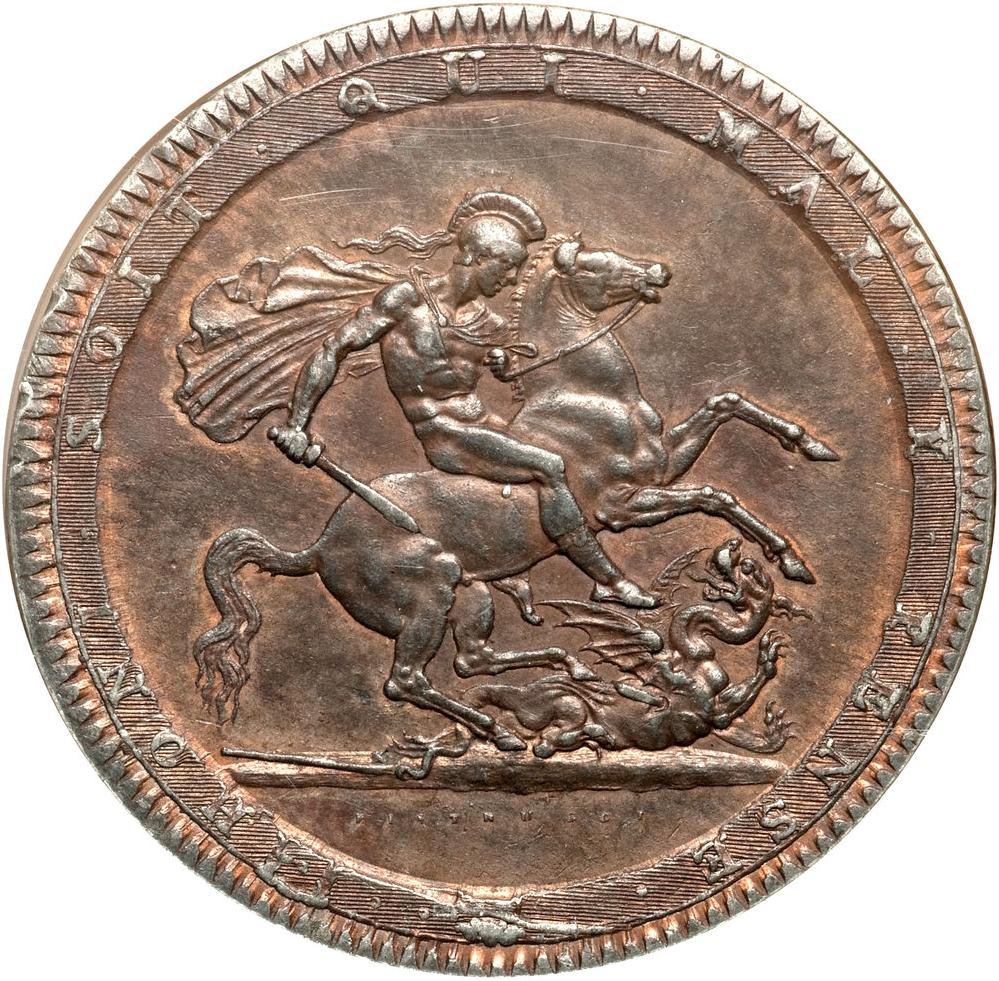
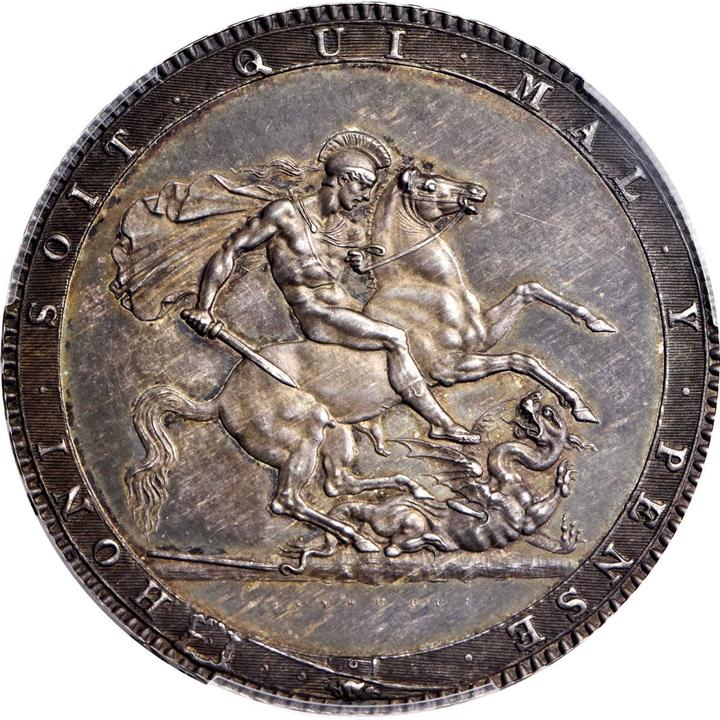
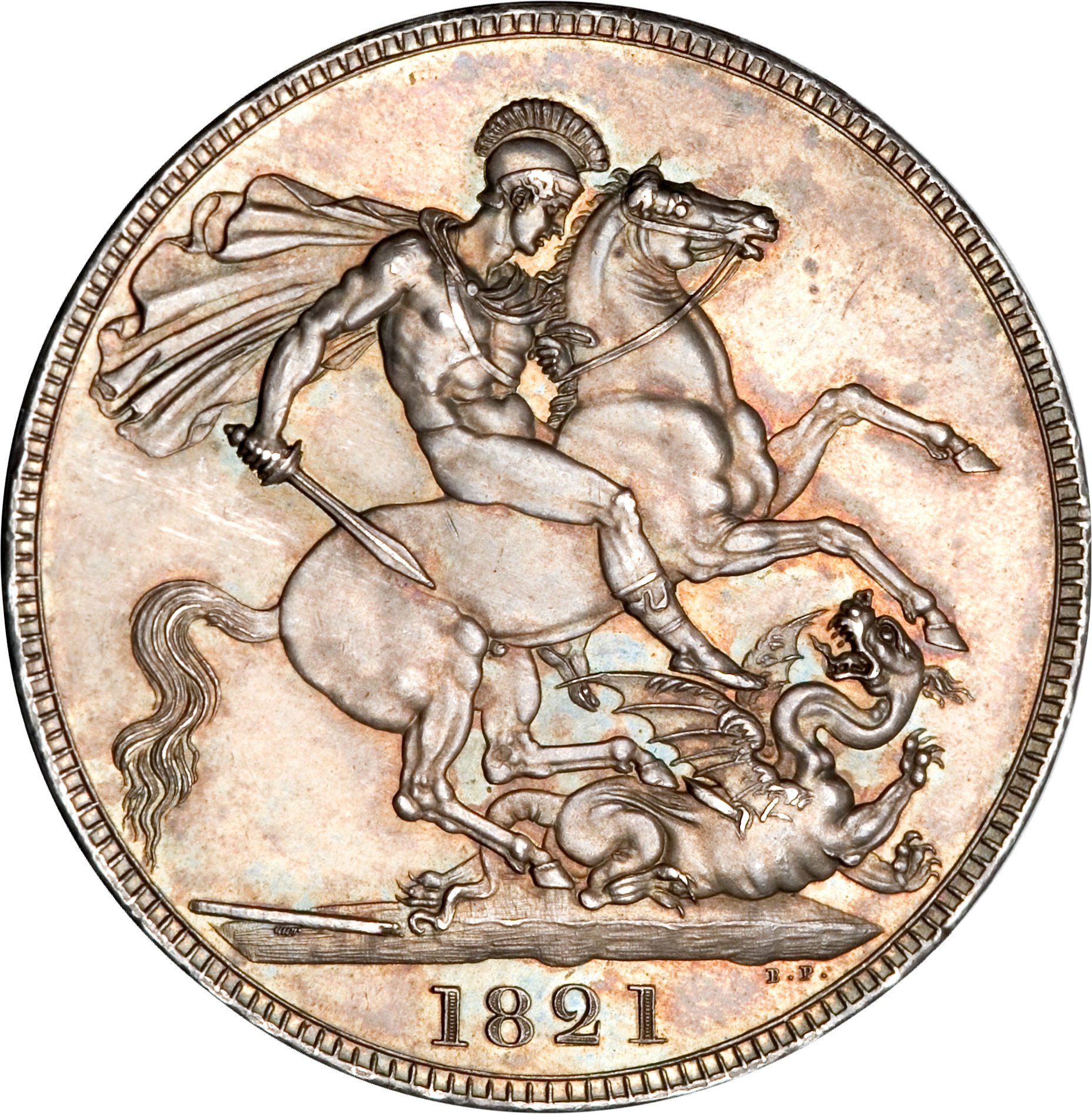
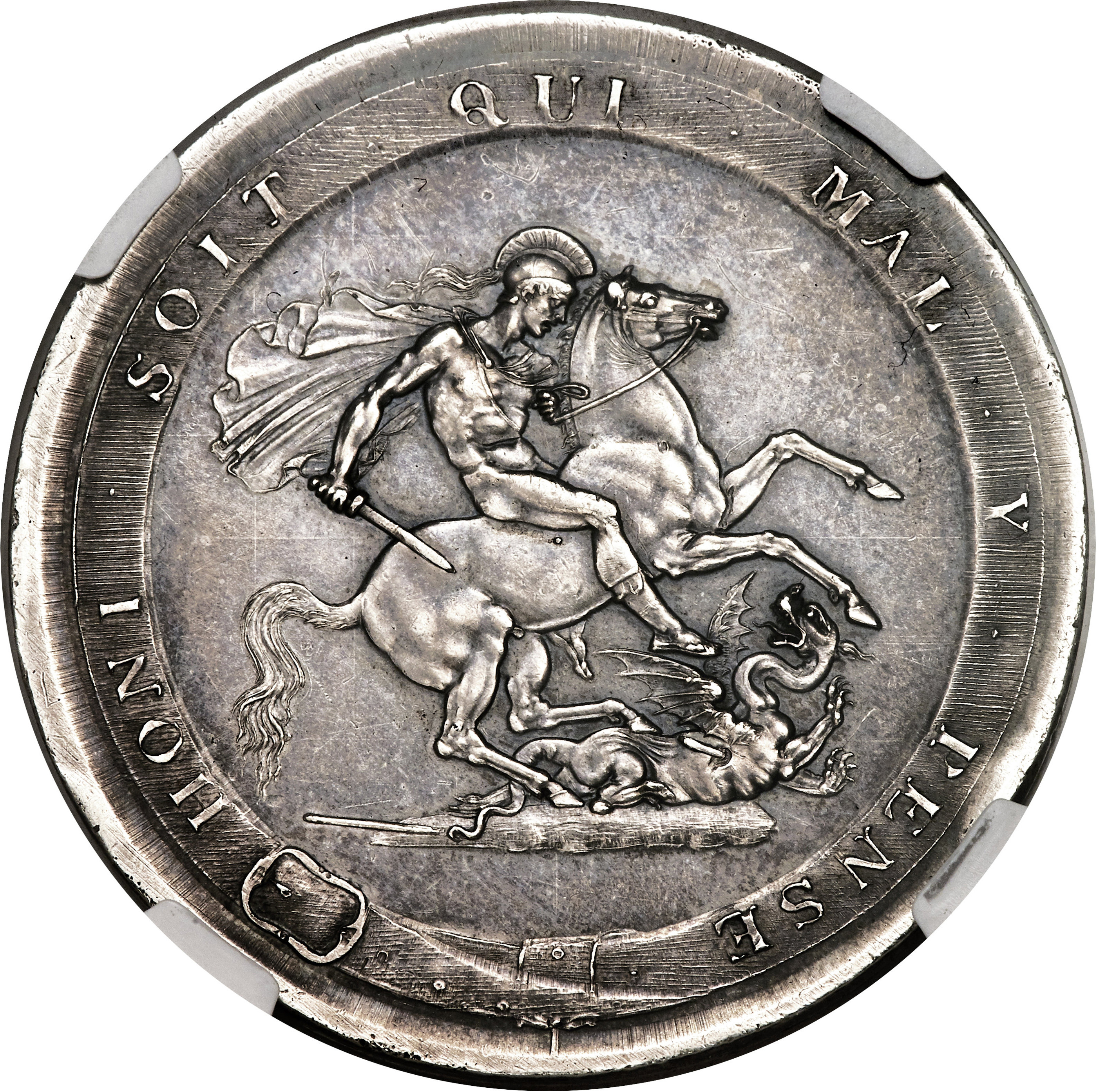
Saint George on horseback slaying the Dragon right, legend around within garter.
HONI SOIT QUI MAL Y PENSE
Find this on eBay
AffiliateSilver Crown price history
Daily limit reachedAbout the 1817 1 Crown - George III Pattern – Silver
The 1817 1 Crown - George III Pattern – Silver is a collector 1 crown coin, struck in silver. It weighs 36g. Reverse design: Saint George on horseback slaying the Dragon right, legend around within garter.
Common questions
How much is the 1817 1 Crown - George III Pattern – Silver worth?
No verified sale of the 1817 1 Crown - George III Pattern – Silver has been logged on MyCoinage yet. Its silver content is worth up to £46.20 at today's spot price, which puts a floor under its value.
What is the 1817 St George pattern crown?
A trial striking of Benedetto Pistrucci's design for the new crown, dated 1817. It has his laureate head of George III and St George slaying the dragon within the Garter. The design was issued on the circulating crown from 1818.
How many 1817 pattern crowns by Pistrucci exist?
CoinsWeekly, writing about the example offered by Numismatica Ars Classica in May 2026, says only four appear to exist in private hands. No figure for the number struck is published.
How does the pattern differ from the 1818 crown?
The main difference is the date: the pattern is dated 1817, a year before any crown was issued. Both show Pistrucci's laureate head and his St George within the Garter. Die differences between the two are not documented.
How is the 1817 1 Crown - George III Pattern – Silver different from the circulating coin?
This is a collector version of the 1817 1 Sovereign - George III Pattern, not the coin found in change. It is struck in silver.
How do I identify the 1817 1 Crown - George III Pattern – Silver?
Check the weight 36g and the metal (silver) against the specification table on this page. The reverse design is described above.
History and design
The recoinage needed a new crown, and in 1817 the Royal Mint had several designs struck as patterns, including two by William Wyon. This pattern is Benedetto Pistrucci's, and it is the design that won. His St George had already appeared on the gold sovereign of 1817, and the Royal Mint Museum records that its use was extended in 1818 to the new crown.
Wikipedia, citing Kevin Clancy's history of the sovereign, describes the Master of the Mint, William Wellesley Pole, at every turn of the crown's design, pressing Pistrucci with instructions on the shape of the sword and the ferocity of the dragon. CoinsWeekly, describing an example offered by Numismatica Ars Classica in May 2026, says only four appear to exist in private hands. No figure for the number struck is published.
The obverse is Pistrucci's laureate head of George III, with the King's titles around. CoinsWeekly points out that it bears no resemblance to the elderly and ill King of 1817, and suggests Pistrucci took his model from Hellenistic coin portraits. The reverse shows a nude St George in a Greek helmet and flowing cloak, armed with a short sword, on a rearing horse above a winged dragon, the whole within the Garter and its motto HONI SOIT QUI MAL Y PENSE.
The St George design owes much to Greek sculpture. Pistrucci had made a St George for Lady Spencer, who asked for the Greek style, and CoinsWeekly links his horseman to the riders of the Parthenon frieze, which went on public show in London in the years before.
Collecting notes
This is a pattern and did not circulate. Examples are judged on their surfaces and on provenance, and any piece offered should be compared closely with the issued 1818 crown: the date is the first check, since Tony Clayton records the circulating crowns from 1818 to 1820.
The circulating version is the 1818 crown.
Sources
The history, design, varieties and collecting notes on this page are drawn from these sources. Prices come from recorded sales, not from them.
- Benedetto Pistrucci, the Parthenon frieze and St George, CoinsWeekly (read 12 Oct 2026)
- Benedetto Pistrucci, Royal Mint Museum (read 12 Oct 2026)
- Benedetto Pistrucci, Wikipedia (read 12 Oct 2026)
- William Wellesley Pole, Master of the Royal Mint 1814-1823, Royal Mint Museum (read 12 Oct 2026)
- Five Shillings, Quarter Guinea and Five and Six, Tony Clayton, Coins of the UK (read 12 Oct 2026)
More 1 Crown coins from nearby years