¼ Guinea - George III 2nd portrait Proof Pattern (1764)
| Country | United Kingdom |
| Year | 1764 |
| Denomination | ¼ Guinea |
| Mint | Royal Mint · Llantrisant |
| Circulation | Non-circulating |
| Demonetised | Yes |
| Composition | Gold (.9167) (917/1000 fine) |
| Diameter | 17.0mm |
| Shape | Round |
| Edge | Plain |
| Obv. artist | Richard Yeo |
| Grade scale | UK (EF/UNC) |
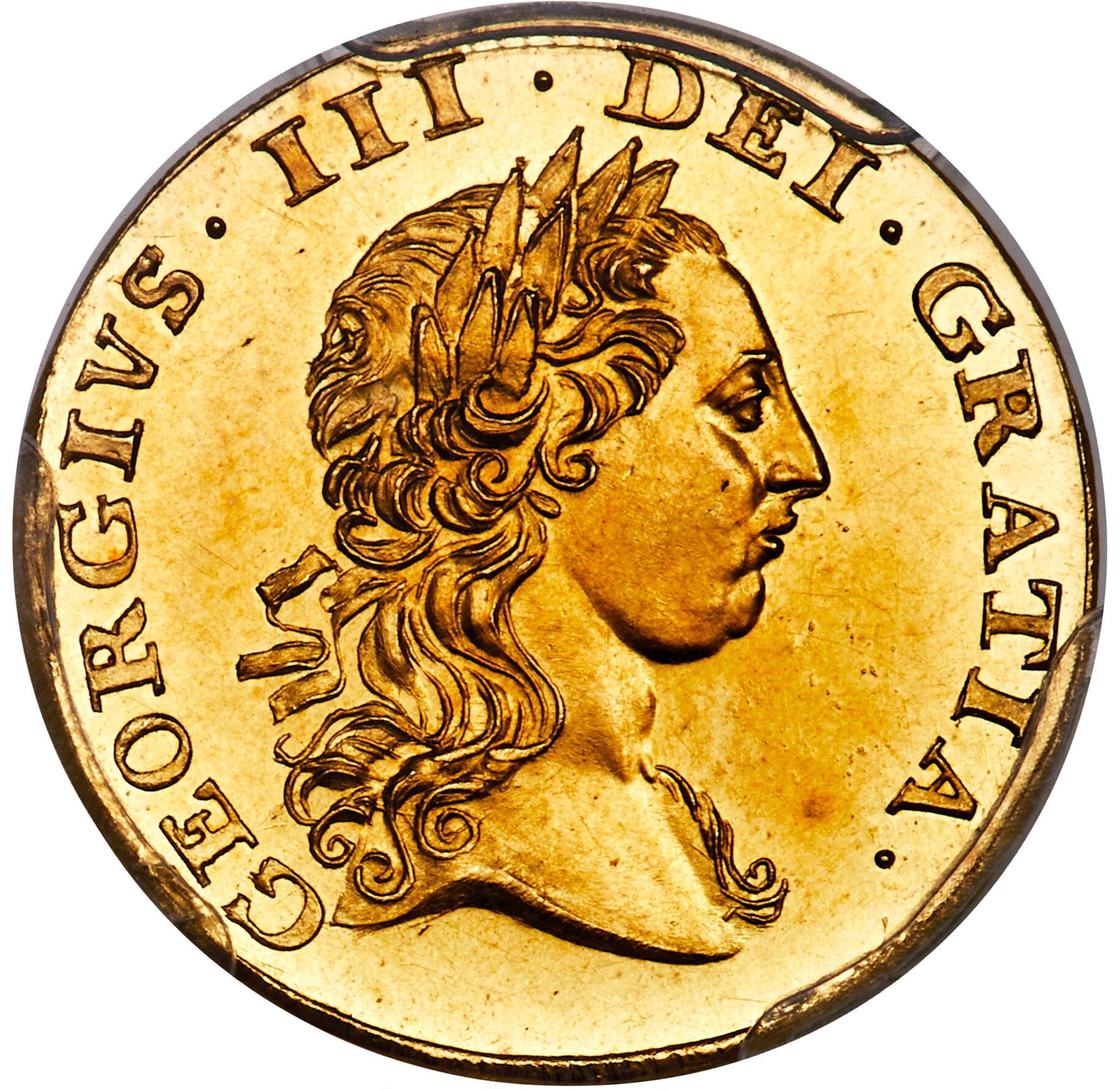
Second laureate portrait of King George III right, legend around.
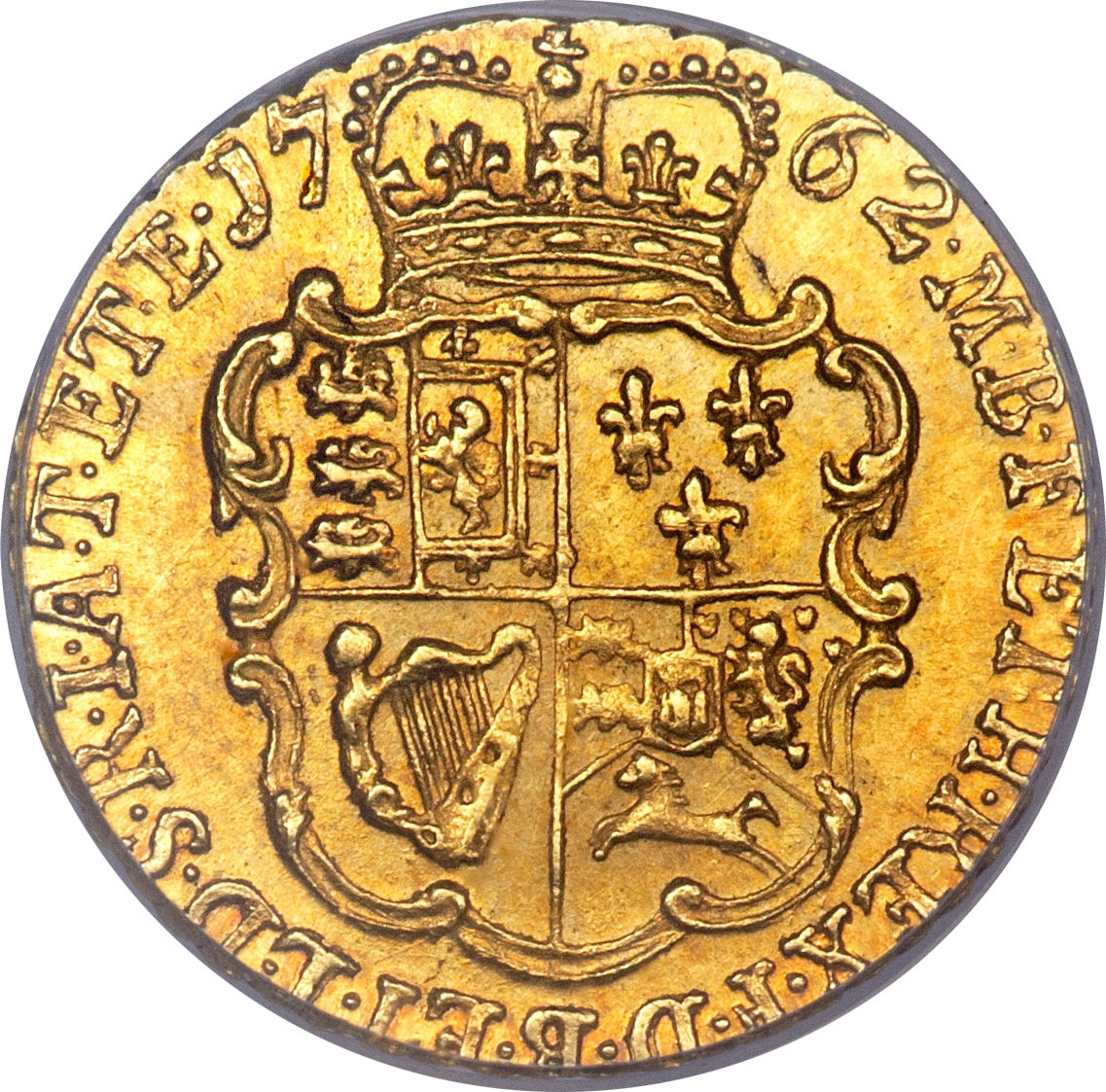
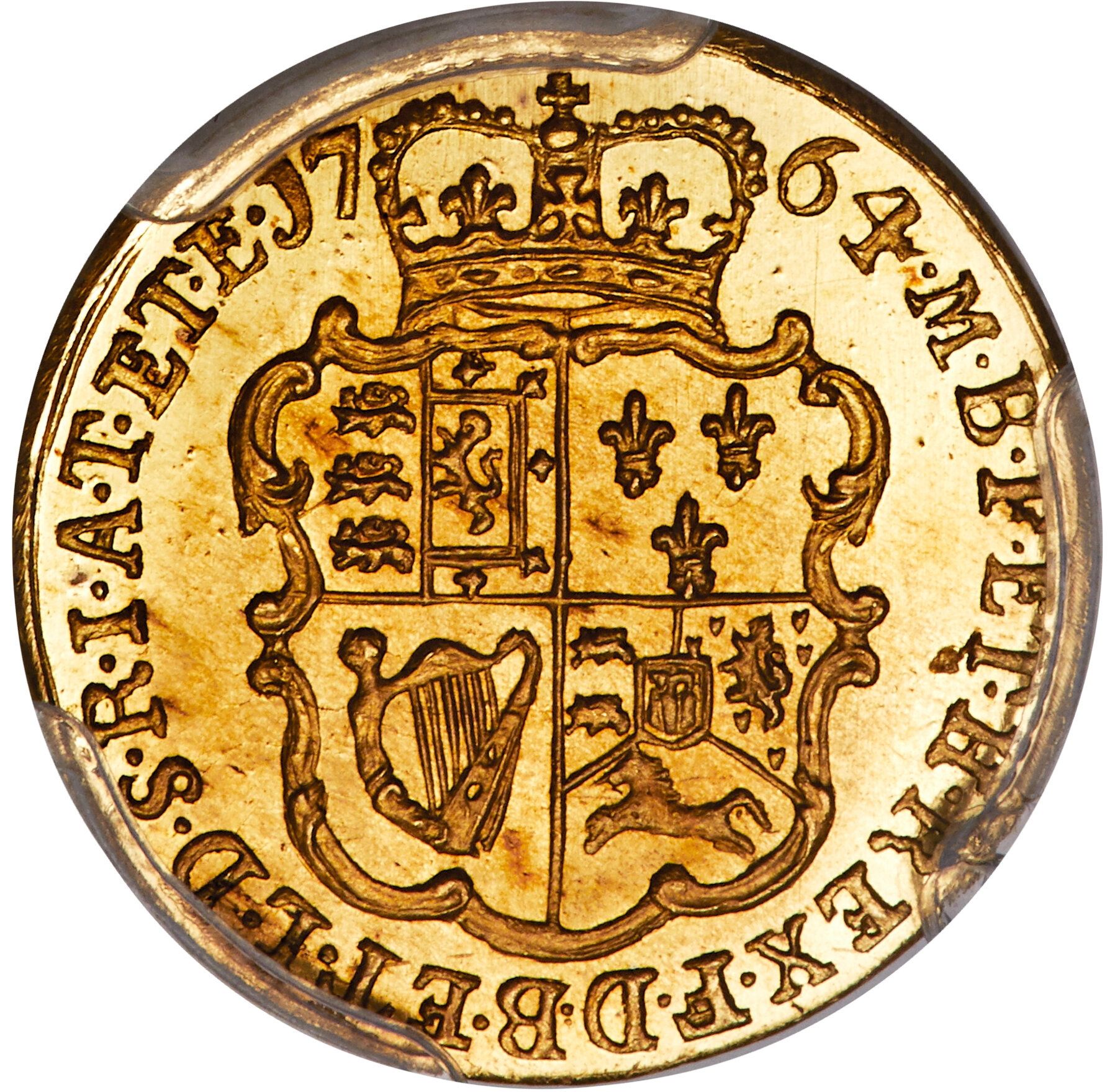
Orante crowned quartered shield of arms, divided date above, legend around.
Find this on eBay
AffiliateProof Pattern Quarter Guinea price history
Daily limit reachedAbout the 1764 Quarter Guinea - George III – Proof Pattern
The 1764 Quarter Guinea - George III – Proof Pattern is a collector ¼ guinea coin, struck in 91.67% gold. It measures 17mm across. Reverse design: Orante crowned quartered shield of arms, divided date above, legend around.
It is no longer legal tender, so its value is to collectors only.
Common questions
How much is the 1764 Quarter Guinea - George III – Proof Pattern worth?
No verified sale of the 1764 Quarter Guinea - George III – Proof Pattern has been logged on MyCoinage yet.
Were quarter guineas issued in 1764?
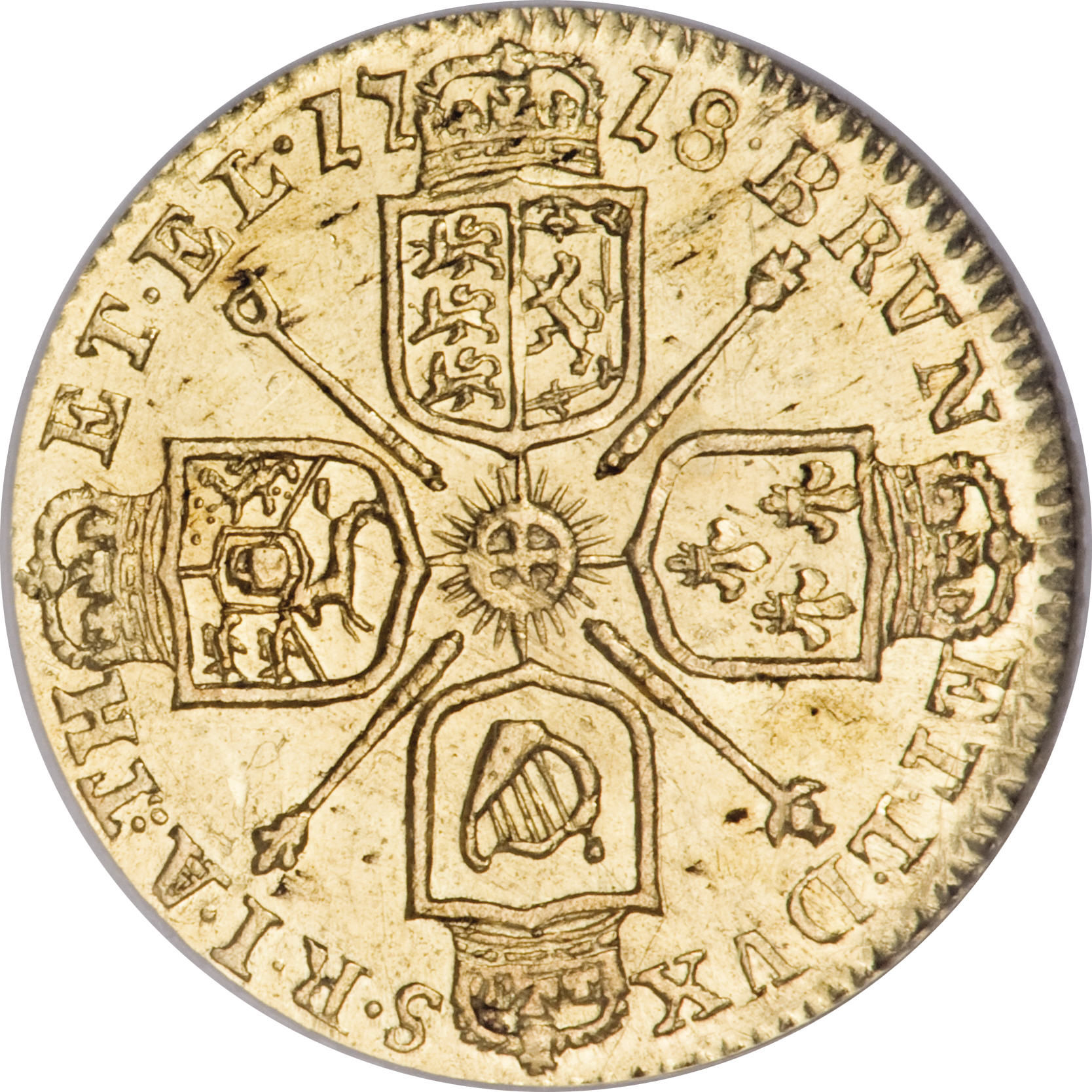
No. The 1764 quarter guinea is a proof pattern. Wikipedia records that quarter guineas were struck for currency only in 1718 and 1762, and both the Royal Mint Museum and Sincona catalogue the 1764 piece as a pattern or proof with a plain edge.
Who made the 1764 pattern quarter guinea?
Richard Yeo, according to the Sincona catalogue quoted by CoinVarieties. Yeo was chief assistant to the ageing Chief Engraver John Sigismund Tanner and, as Wikipedia notes, carried out much of the die work in Tanner's last years.
How do you tell the 1764 pattern from a 1762 quarter guinea?
Check the date and the edge. The 1764 pattern has a plain edge and an upright die axis in the Royal Mint Museum example, while the museum's 1762 currency coin has a grained edge and its reverse turned upside down.
How many 1764 pattern quarter guineas exist?
No number struck is recorded. The Royal Mint Museum holds one, listed in the Mint's 1874 and 1906 collection catalogues and in the Banks list, and an example removed from jewellery was sold by Sincona in 2022.
How do I identify the 1764 Quarter Guinea - George III – Proof Pattern?
Check the diameter 17mm and the metal (91.67% gold) against the specification table on this page. The reverse design is described above.
History and design
The quarter guinea, worth five shillings and threepence, was struck for circulation only in 1718 and 1762. Wikipedia records that the 1762 revival was meant to fill the gap between the small silver and the larger gold coins at a time when little silver was being struck, but the coin was too small to be useful and was not repeated.
This piece, dated 1764, is a proof pattern made two years after the last currency issue. The Royal Mint Museum catalogues its example as a proof quarter guinea, and the Sincona auction catalogue quoted by CoinVarieties calls it a pattern. Why it was made is not recorded, and no quarter guinea with this date was ever issued.
The obverse carries a young laureate head of George III facing right, by Richard Yeo. Yeo was the chief assistant to John Sigismund Tanner, Chief Engraver from 1741 to 1775, and Wikipedia notes that he did much of the die work in Tanner's last years before succeeding him.
The pattern differs from the currency coin in its finish and edge as well as its date. The Royal Mint Museum's example has a plain edge rather than the grained edge of the 1762 coin, and its dies are aligned with the reverse upright, where the museum's 1762 coin has the reverse turned through 180 degrees.
Collecting notes
No number struck is recorded. The Royal Mint Museum's example weighs 1.85 g and appears in the Mint's collection catalogues of 1874 and 1906 and the Banks list. CoinVarieties records a specimen sold by Sincona in October 2022, graded by NGC as proof with details because it had been removed from jewellery and showed a flan flaw; it weighed 1.66 g.
Those two weights fall below the standard of about 2.1 g given for the currency coin, so weight alone will not separate a pattern from a damaged currency piece. Check the date, the plain edge and the die axis. The circulating coin is the 1762 quarter guinea.
Sources
The history, design, varieties and collecting notes on this page are drawn from these sources. Prices come from recorded sales, not from them.
- George III proof quarter-guinea, 1764 (RMM 977), The Royal Mint Museum, via Museum Data Service (read 12 Oct 2026)
- Great Britain 1764 1/4 guinea, CoinVarieties (read 12 Oct 2026)
- John Sigismund Tanner, Wikipedia (read 12 Oct 2026)
- Quarter guinea, Wikipedia (read 12 Oct 2026)
- George III quarter-guinea, 1762 (RMM 976), The Royal Mint Museum, via Museum Data Service (read 12 Oct 2026)
- Guinea (coin), Wikipedia (read 12 Oct 2026)