¼ Decimal Penny Uniface Pattern (1963)
| Country | United Kingdom |
| Year | 1963 |
| Denomination | ¼ Penny |
| Mint | Royal Mint · Llantrisant |
| Circulation | Non-circulating |
| Composition | Aluminium |
| Weight | 0.900g |
| Shape | Round |
| Edge | Plain |
| Rev. artist | Christopher Ironside |
| Grade scale | UK (EF/UNC) |
| Spink | S7Standard |
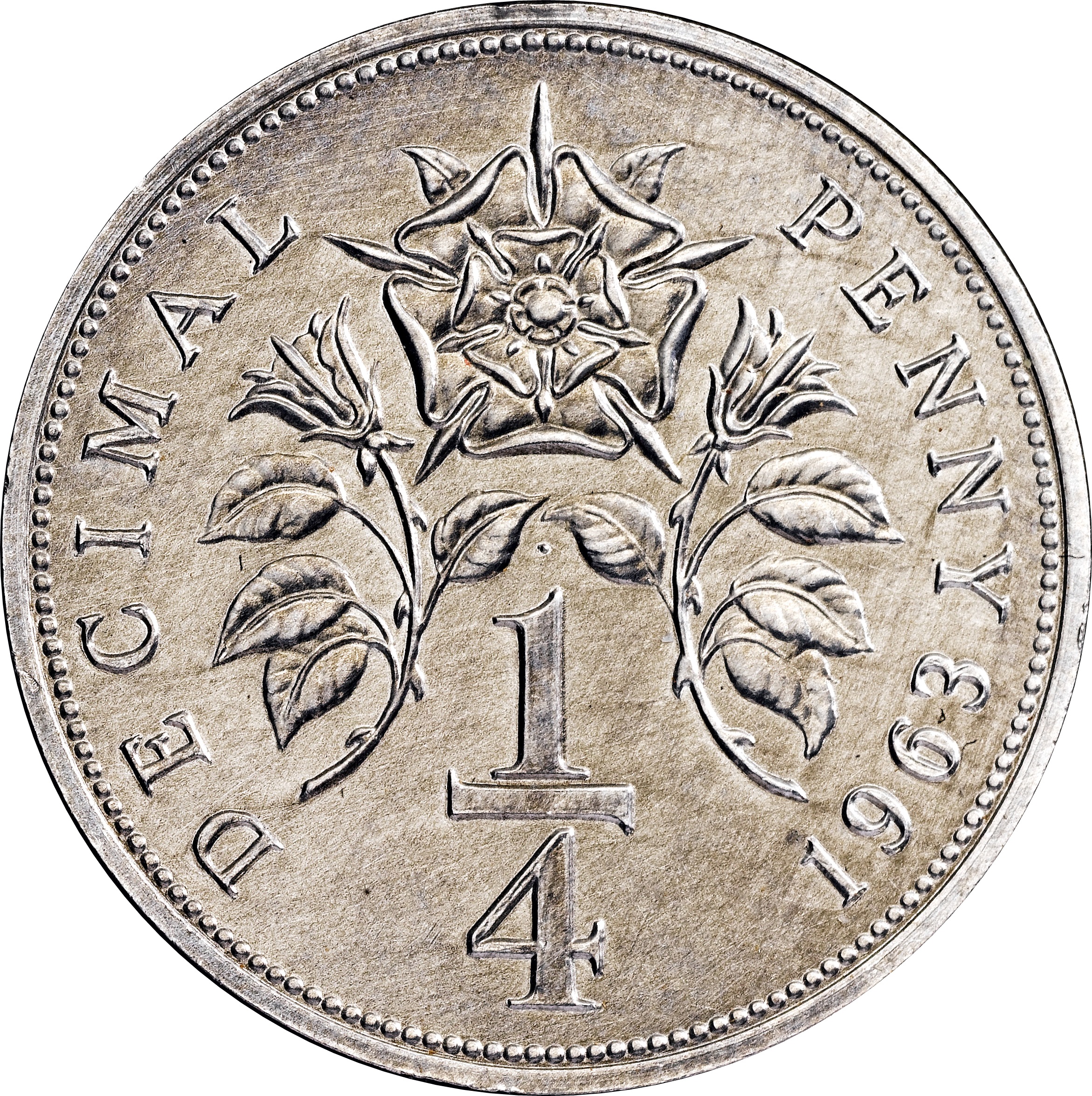
Three roses above denomination, legend and date around.
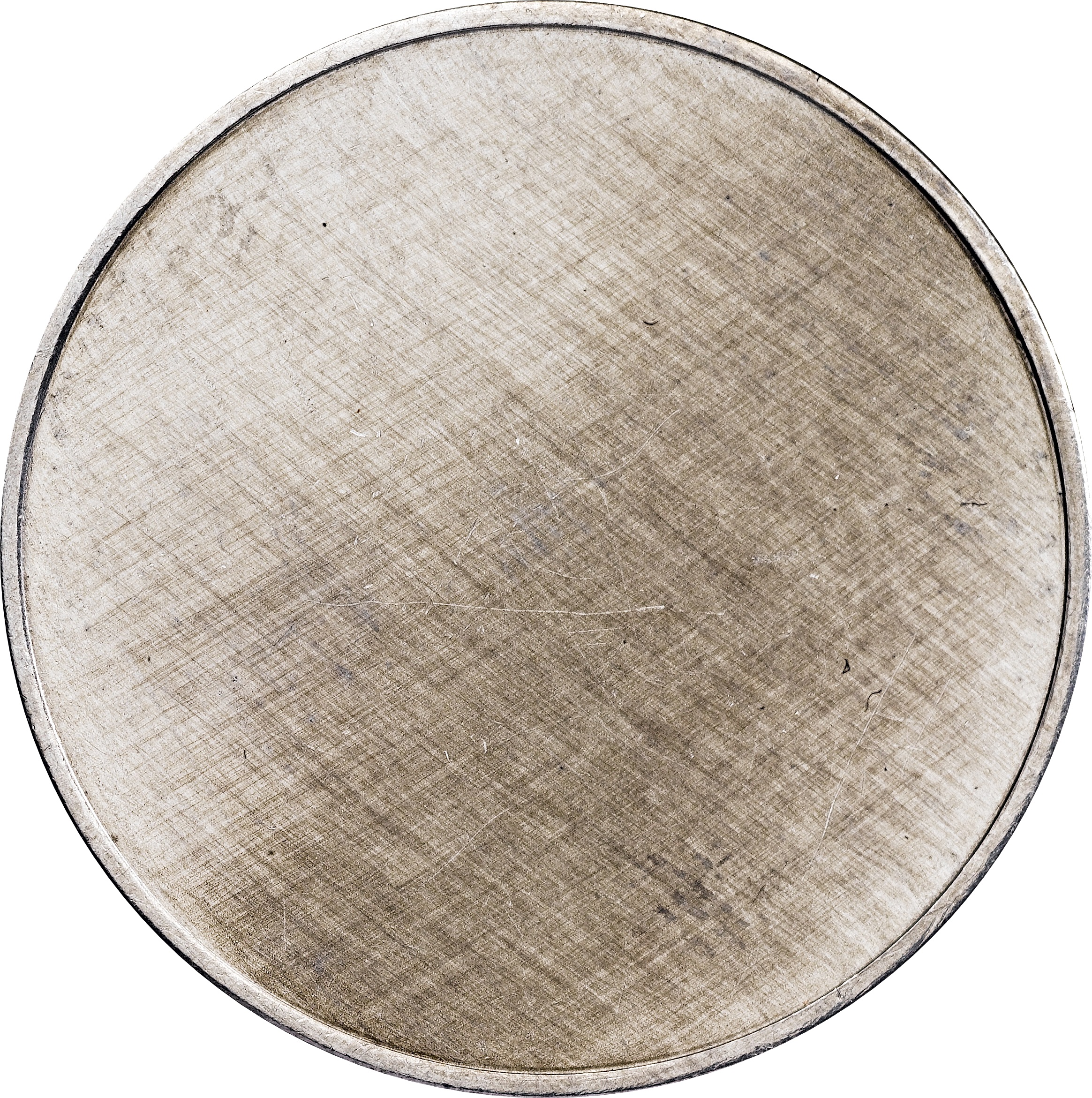
Unlike the other patterns in this series, all examples of this piece are uniface.
DECIMAL ¼ PENNY 1963
Find this on eBay
AffiliateQuarter Decimal Penny Uniface Pattern price history
Daily limit reachedAbout the 1963 Quarter Decimal Penny Uniface Pattern
The 1963 Quarter Decimal Penny Uniface Pattern is a collector ¼ penny coin, struck in aluminium. It weighs 0.9g. Reverse design: Unlike the other patterns in this series, all examples of this piece are uniface.
Common questions
How much is the 1963 Quarter Decimal Penny Uniface Pattern worth?
No verified sale of the 1963 Quarter Decimal Penny Uniface Pattern has been logged on MyCoinage yet.
Was there ever a quarter decimal penny coin?
No. The decimal coins introduced between 1968 and 1971 ran from the halfpenny to the 50p, and no quarter penny was issued. This aluminium piece is a 1963 trial for a denomination that was considered during the Royal Mint's early, secret preparations and then dropped.
Who designed the quarter decimal penny pattern?
Christopher Ironside, the sculptor whose designs later appeared on the decimal coins of 1968 to 1971. Royal Mint Museum and Royal Collection records name him as the designer of these 1963 uniface pieces.
Why is the quarter penny pattern blank on one side?
It is a uniface trial, struck on one side only so the reverse design could be judged on its own. The Royal Mint Museum's examples are aluminium with a plain back and plain edge, weighing about 0.9g.
Is the 1963 quarter decimal penny legal tender?
No. It is a trial piece and was never issued as currency, so it has no legal tender status and no face value. It belongs with patterns and proofs rather than with circulating decimal coins.
How do I identify the 1963 Quarter Decimal Penny Uniface Pattern?
Check the weight 0.9g and the metal (aluminium) against the specification table on this page. The reverse design is described above.
History and design
This is a trial piece, not a coin. It was struck in 1963 at the Royal Mint on Tower Hill as part of the Mint's early and secret work on a decimal coinage, and it is uniface: the design is on one side and the other is left plain. The Royal Mint says design work on decimal coins began in 1962, before any government announcement, and that the secrecy lasted from 1962 to 1968.
The quarter decimal penny is the odd one out in the group. When decimal coins were finally issued between 1968 and 1971, the smallest was the halfpenny, and the Royal Mint Museum notes that Ironside's eventual reverses covered six denominations from the 50p down to the ½p. A quarter penny was never issued, so this piece records an idea that did not survive. No figure for the number struck has been published.
The design is by Christopher Ironside, who joined a combined team from the Royal College of Art and the Faculty of Royal Designers for Industry that won the Mint's first, private competition. The Royal Collection describes its example as a Tudor rose with a rose-bud either side and the value below, reading DECIMAL ¼ PENNY 1963. The other side is blank.
Unlike the bronze trials for the higher values, this piece is aluminium. The Royal Mint Museum's examples weigh 0.90g to 0.91g and have a plain edge, and the Royal Collection gives a diameter of 1.96 cm. There is no portrait on the piece.
Collecting notes
The best documented examples are institutional: the Royal Mint Museum holds several, all described as aluminium with a plain back, and the Royal Collection holds another. When an example is offered, check that it is aluminium, that the back is truly blank, and that the weight is close to 0.9g. The legend should include the word DECIMAL and the date 1963.
The work behind these trials was overtaken in 1966, when the Chancellor announced decimalisation and insisted on an open competition for the designs. Ironside entered again and his new designs were chosen, so the decimal coins of 1968 to 1971 show later work, not the 1963 rose. The bronze trials in the same group include the half decimal penny uniface.
Sources
The history, design, varieties and collecting notes on this page are drawn from these sources. Prices come from recorded sales, not from them.
- Elizabeth II uniface reverse quarter decimal penny, 1963 (RMM 3228), The Royal Mint Museum, via Museum Data Service (read 10 Oct 2026)
- Elizabeth II Uniface pattern Quarter decimal pence. Type II., Royal Collection Trust (read 10 Oct 2026)
- Christopher Ironside's decimal designs, The Royal Mint (read 10 Oct 2026)
- Decimalisation, Royal Mint Museum (read 10 Oct 2026)
- Christopher Ironside, Royal Mint Museum (read 10 Oct 2026)