1 Sovereign - Elizabeth II 1st portrait Pattern (1953)
"1953 Coronation sovereign"
| Country | United Kingdom |
| Year | 1953 |
| Denomination | 1 Sovereign |
| Face value | £1 |
| Mint | Royal Mint · Llantrisant |
| Series | Sovereign |
| Circulation | Non-circulating |
| Composition | Gold (.9167) (917/1000 fine) |
| Weight | 7.970g · 0.2349 t oz |
| Diameter | 22.1mm |
| Shape | Round |
| Edge | Milled |
| Orientation | Medal alignment ↑↑ |
| Obv. artist | Mary Gillick |
| Rev. artist | Benedetto Pistrucci |
| Grade scale | UK (EF/UNC) |
Young laureate portrait of Queen Elizabeth II right, small
ELIZABETH II DEI GRA : BRITT : OMN : REGINA F : D :
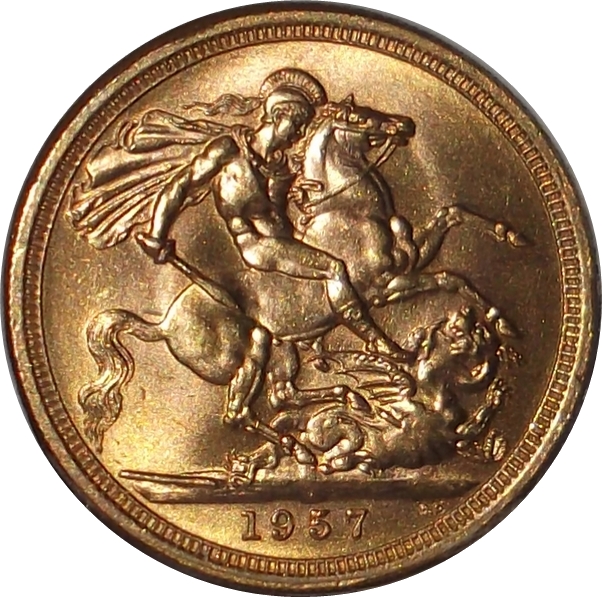
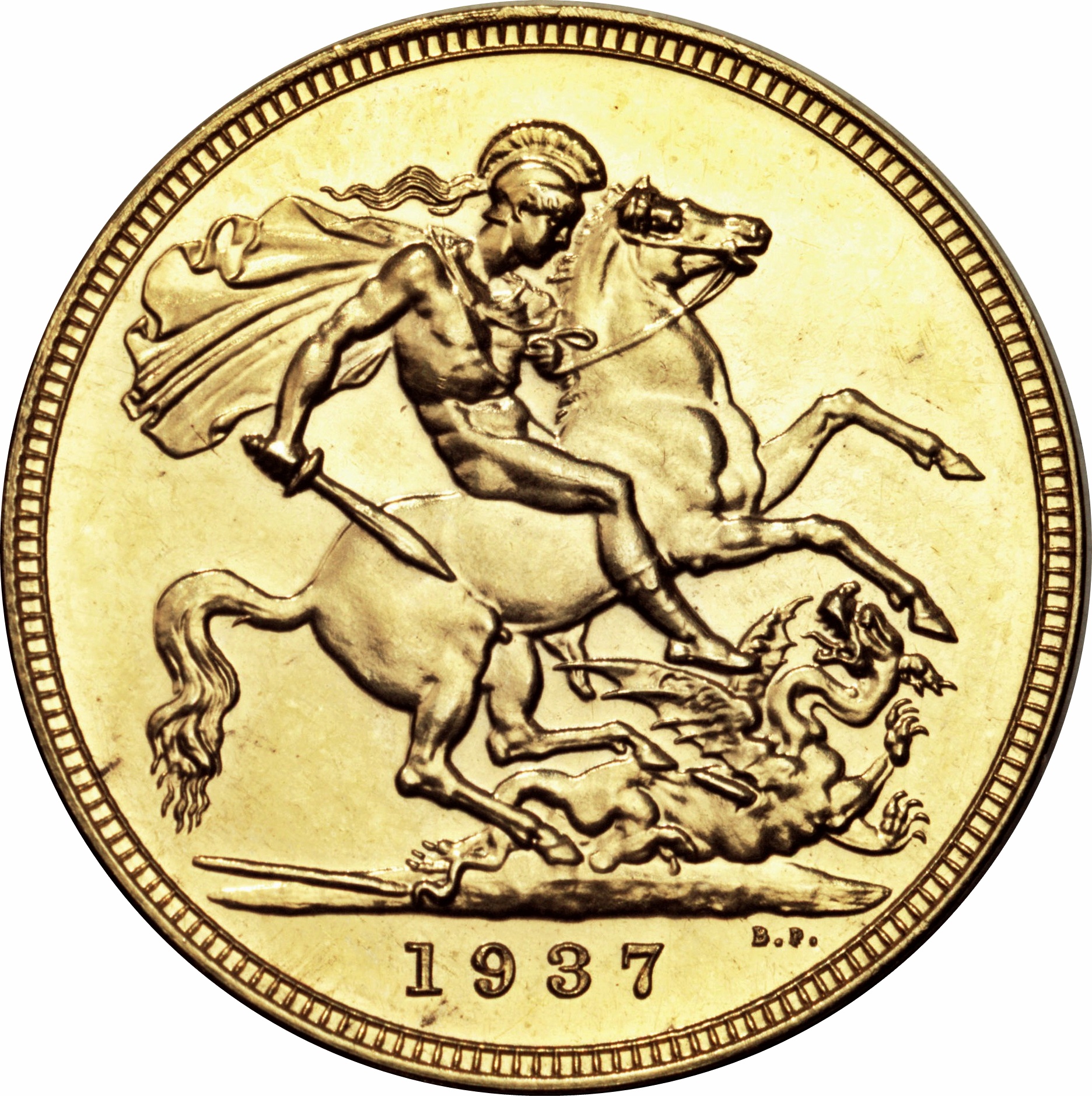
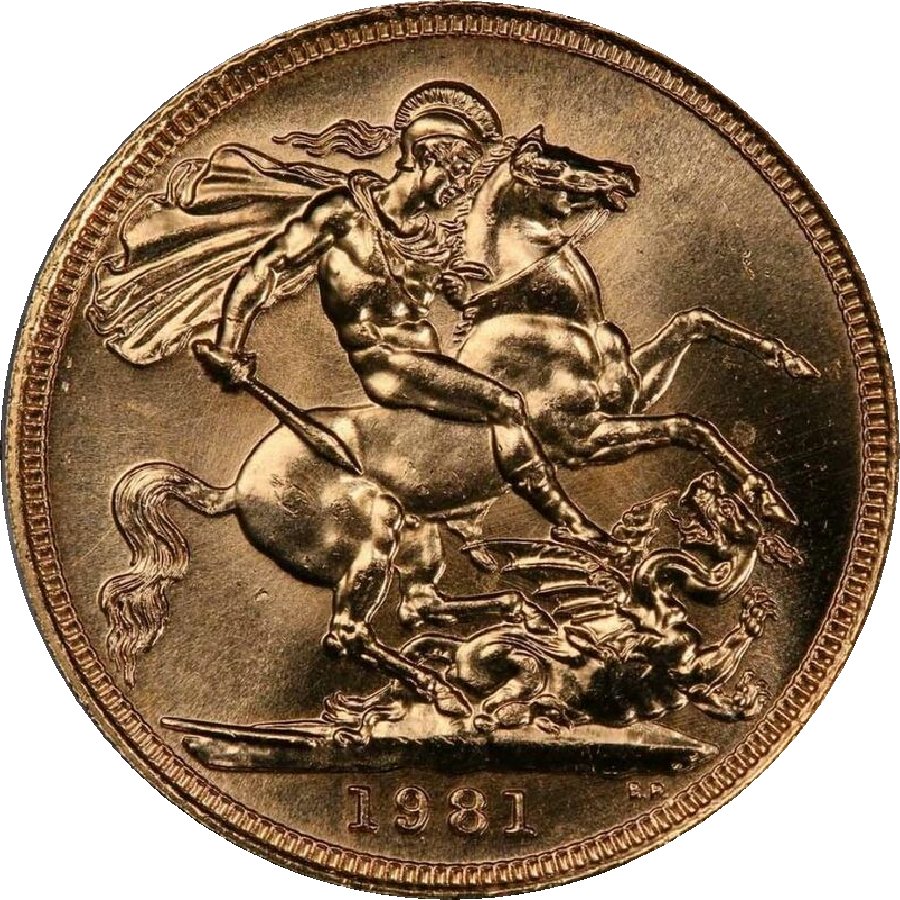
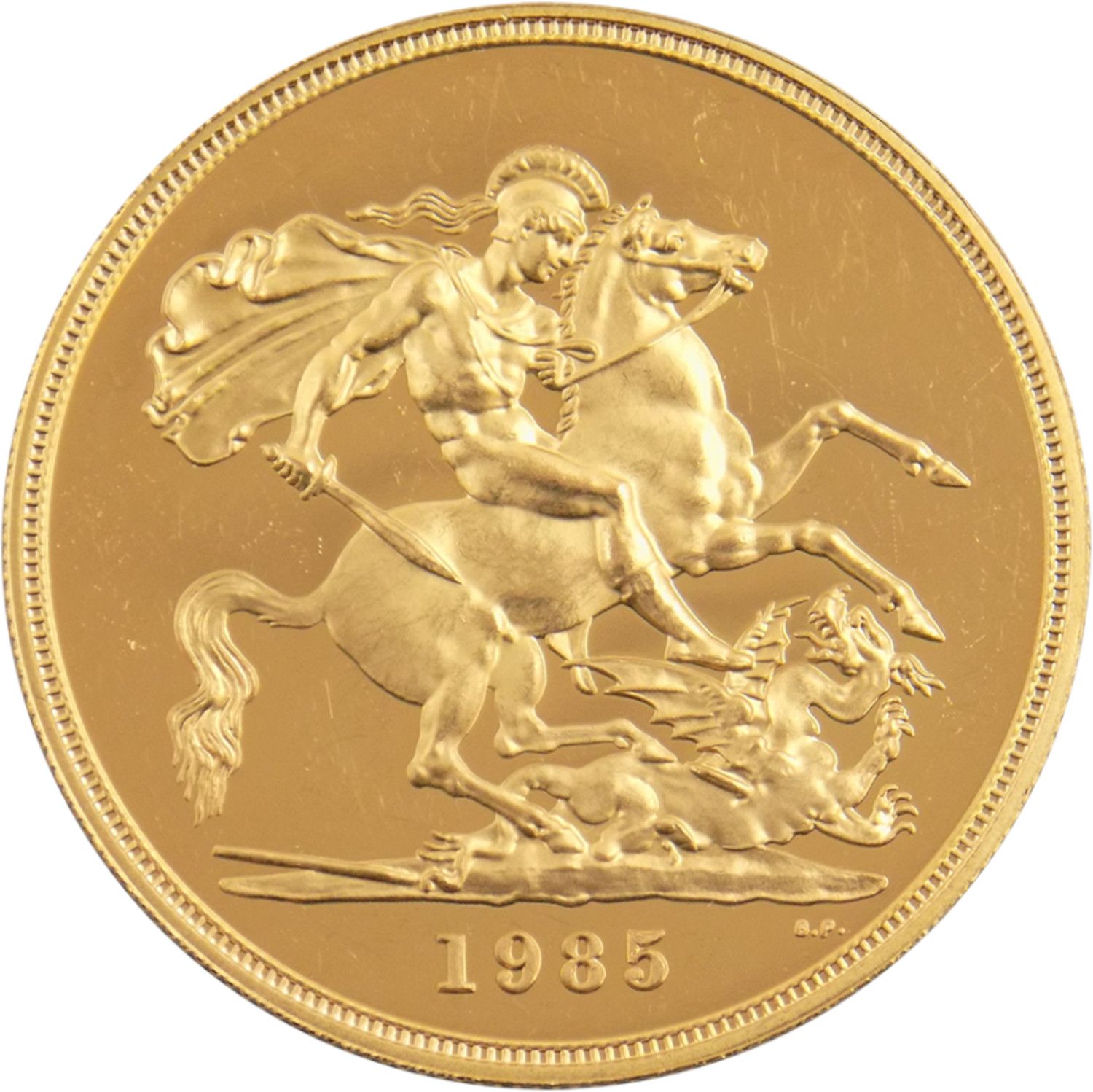
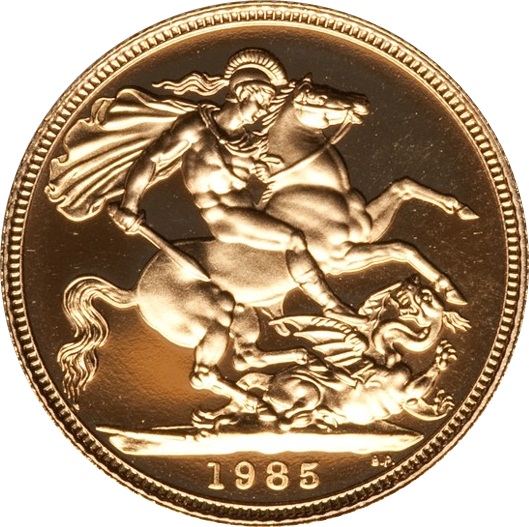
St. George on horseback with flowing cloak and helmet with streamer, slaying dragon with sword, broken lance on ground to lower left, date and
Find this on eBay
AffiliatePattern Sovereign price history
Daily limit reachedAbout the 1953 1 Sovereign - Elizabeth II – Pattern
The 1953 1 Sovereign - Elizabeth II – Pattern is a collector 1 sovereign coin in the Sovereign series, struck in 91.67% gold. It weighs 7.97g and measures 22.05mm across. Reverse design: St. George on horseback with flowing cloak and helmet with streamer, slaying dragon with sword, broken lance on ground to lower left, date and.
Common questions
How much is the 1953 1 Sovereign - Elizabeth II – Pattern worth?
No verified sale of the 1953 1 Sovereign - Elizabeth II – Pattern has been logged on MyCoinage yet. Its gold content is worth about £706 at today's spot price, which puts a floor under its value.
Can you buy a 1953 sovereign?
Almost never. The Royal Mint Museum says only a very limited number of 1953 gold coins were struck, for national collections such as the British Museum and the Royal Collection. Coins of the UK says the 1953 sovereigns were not released to the public.
How many 1953 sovereigns were made?
No exact figure is published. The Royal Collection Trust says the 1953 gold sets of five pounds, two pounds, sovereign and half-sovereign are believed to number only ten. The Royal Mint Museum says only that a very limited number was struck.
Why were no gold coins issued for the Coronation?
The Royal Mint Museum says limits on holding gold and overseas exchange restrictions meant a gold set could not be offered for sale in 1953. The Royal Collection Trust gives the same reason: post-war restrictions on the public holding of gold.
What is different about the legend on the 1953 sovereign?
It reads ELIZABETH II DEI GRA : BRITT : OMN : REGINA F : D :. The Royal Mint says BRITT OMN, present on the 1953 coin, was dropped from later sovereigns owing to the changing status of many Commonwealth territories, so the 1957 to 1968 issues lack it.
How do I identify the 1953 1 Sovereign - Elizabeth II – Pattern?
Check the weight 7.97g and diameter 22.05mm and the metal (91.67% gold) against the specification table on this page. The reverse design is described above.
History and design
The 1953 sovereign belongs to the Coronation coinage of Elizabeth II but was never issued. The Royal Mint Museum says limits on holding gold and overseas exchange restrictions meant a gold set could not be sold, so only a very limited number of five pounds, double sovereigns, sovereigns and half-sovereigns were struck for national collections, including the British Museum and the Royal Collection.
The Royal Collection Trust, which holds an example presented by the Royal Mint, says the sets are believed to number only ten and went to the Royal Family, national collections and Goldsmiths' Hall. The Royal Mint resumed regular sovereign production only in 1957.
The obverse is Mary Gillick's portrait of the young Queen wearing a laurel wreath, which the Royal Collection Trust likens to busts of Roman emperors. The legend, set by the proclamation of 25 November 1952, reads ELIZABETH II DEI GRA : BRITT : OMN : REGINA F : D :.
The reverse is Benedetto Pistrucci's St George slaying the dragon, with the date in the exergue, a design the Royal Collection Trust notes has appeared on gold sovereigns since 1817. The proclamation specifies a graining on the edge.
A proclamation of October 1953 removed BRITT OMN from the coinage from 1 January 1954. The Royal Mint attributes the change to the changing status of many Commonwealth territories, and the issued sovereigns of 1957 to 1968 do not carry it.
Collecting notes
The Royal Mint calls the piece the 1953 Proof coin and the Royal Collection Trust catalogues it as a pattern; Coins of the UK says the 1953 sovereigns were not released to the public. With the known examples largely in institutional hands, any 1953 sovereign offered for sale needs a documented provenance and expert authentication.
For the issued sovereigns with the same portrait but without BRITT OMN, see the 1957 to 1968 sovereign.
Sources
The history, design, varieties and collecting notes on this page are drawn from these sources. Prices come from recorded sales, not from them.
- Elizabeth II Pattern sovereign, 1953 (RCIN 443796), Royal Collection Trust (read 10 Oct 2026)
- New coins for a new monarch, Royal Mint Museum (read 10 Oct 2026)
- The Edinburgh Gazette, issue 17023 (proclamation of 25 November 1952), The Gazette (read 10 Oct 2026)
- The Modern Sovereign Returns, The Royal Mint (read 10 Oct 2026)
- One Pound (Sovereign) or Guinea, Tony Clayton, Coins of the UK (read 10 Oct 2026)
- Sovereign (British coin), Wikipedia (read 10 Oct 2026)
- The Belfast Gazette, issue 1685, page 237 (proclamation of 4 October 1953), The Gazette (read 10 Oct 2026)
More from Sovereign