1 Farthing - Victoria Arnott Cannock and Co Drapers Newcastle On Tyne (1848–1860)
| Country | United Kingdom |
| Year | 1848–1860 |
| Denomination | 1 Farthing |
| Mint | Royal Mint · Llantrisant |
| Circulation | Non-circulating |
| Demonetised | Yes |
| Weight | 4.290g |
| Diameter | 21.1mm |
| Thickness | 1.56mm |
| Shape | Round |
| Edge | Plain |
| Orientation | Medal alignment ↑↑ |
| Grade scale | UK (EF/UNC) |
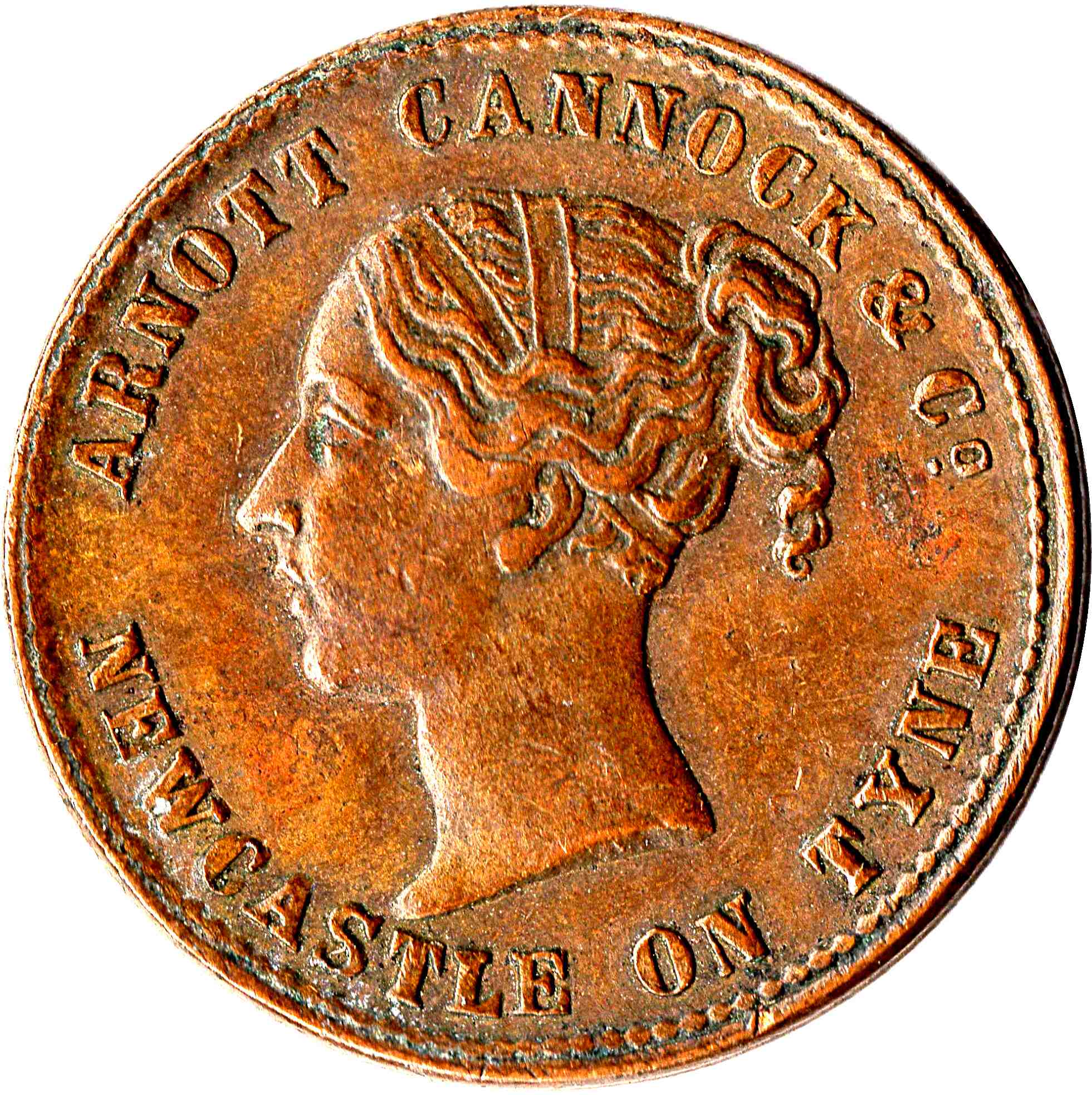
The young bust of Queen Victoria facing left.
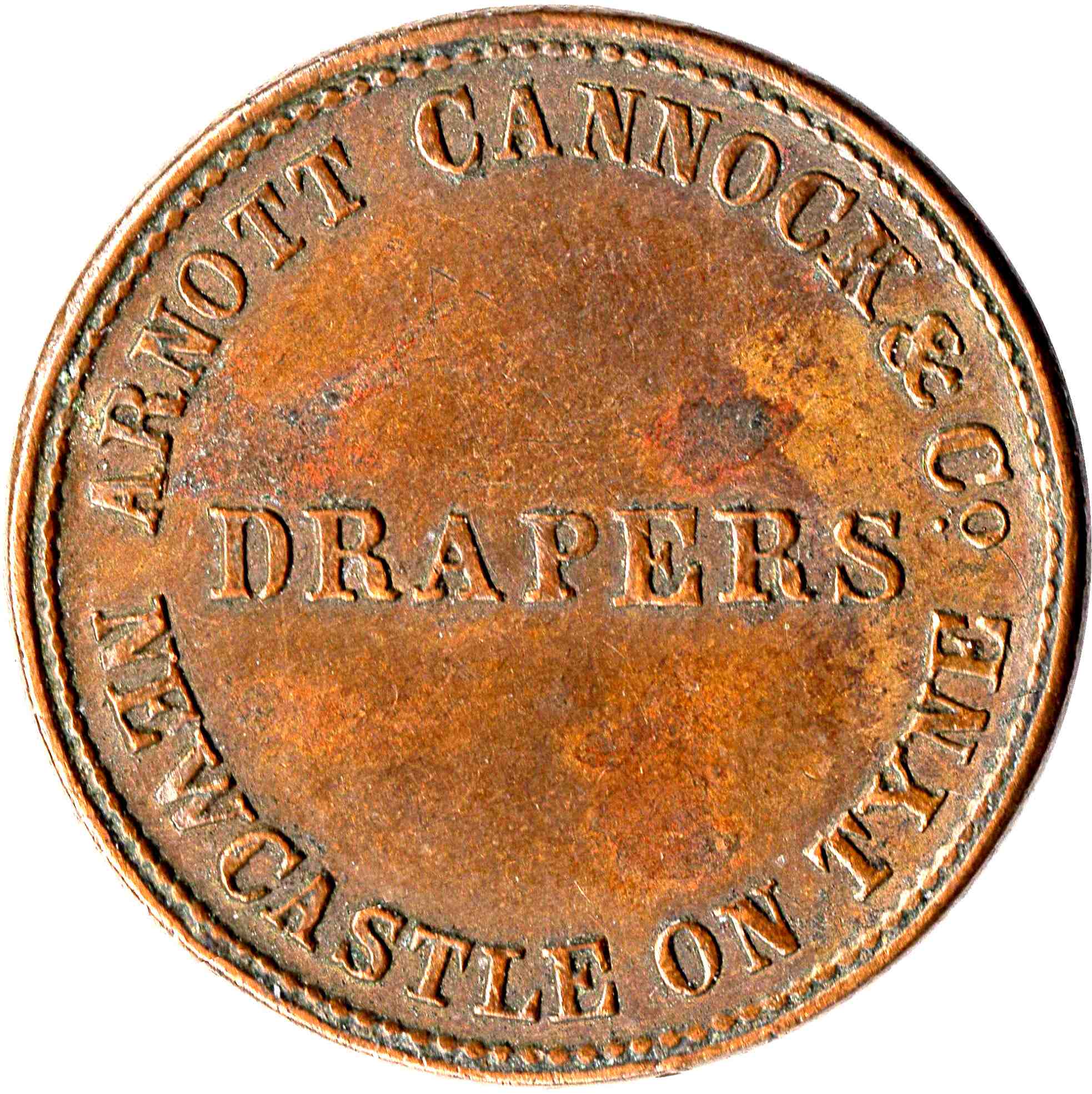
Legend on three lines, the top and bottom curved. Beaded border
Find this on eBay
Affiliate1 Farthing - Victoria Arnott Cannock and Co Drapers Newcastle On Tyne price history
Daily limit reachedAbout the 1848 1 Farthing - Victoria Arnott Cannock and Co Drapers Newcastle On Tyne
The 1848 1 Farthing - Victoria Arnott Cannock and Co Drapers Newcastle On Tyne is a collector 1 farthing coin issued from 1848 to 1860. It weighs 4.29g and measures 21.1mm across. Reverse design: Legend on three lines, the top and bottom curved. Beaded border.
It is no longer legal tender, so its value is to collectors only.
Common questions
How much is the 1848 1 Farthing - Victoria Arnott Cannock and Co Drapers Newcastle On Tyne worth?
No verified sale of the 1848 1 Farthing - Victoria Arnott Cannock and Co Drapers Newcastle On Tyne has been logged on MyCoinage yet.
Is the Arnott Cannock farthing a real coin?
No. It is a private token made for Arnott Cannock & Co, drapers of Newcastle upon Tyne. It copies the size of the farthing and carries a head of Queen Victoria, but it was not struck or issued by the Royal Mint and was never legal tender.
Why did shops issue farthing tokens in Victoria's reign?
Unofficial farthings were issued by traders, mostly between about 1837 and 1870, and served both as advertising and as small change where needed. Paul and Bente Withers' catalogue of these pieces lists about 1,100 types, including 686 English ones.
Where can I see an Arnott Cannock token?
North East Museums (Tyne and Wear Archives and Museums) holds several, catalogued TWCMS 2008.540 to 2008.542. Its records describe a round brown metal token about 21 mm across, with the young head of Victoria, the firm's name and town, and plain edges.
How do I identify the 1848 1 Farthing - Victoria Arnott Cannock and Co Drapers Newcastle On Tyne?
Check the weight 4.29g and diameter 21.1mm against the specification table on this page. The reverse design is described above.
History and design
During Victoria's reign many traders had small pieces struck in the size of the farthing. Collectors call them unofficial farthings: the Canadian Token Collectors Club archive describes them as issued by merchants, mostly between 1837 and 1870, and used both as advertising and as small change where needed. They came after an Act of 1817 had forbidden the manufacture of private token coinage, so they were never coins in law.
This piece was made for Arnott Cannock & Co, drapers of Newcastle upon Tyne. It is a trader's token, not an issue of the Royal Mint, and no mintage is recorded.
North East Museums, which holds three examples, describes a round brown metal token about 21 mm across. One side carries a young head of Queen Victoria, and the inscriptions name ARNOTT CANNOCK & CO, NEWCASTLE ON TYNE and DRAPERS. The edges are plain. The engraver and maker are not recorded.
Collecting notes
Pieces like this are collected as tokens rather than as part of the regal coin series. The standard references are R. C. Bell's Unofficial Farthings 1820 to 1870 with its 1994 supplement, and Paul and Bente Withers' The Token Book 2, which the Old Currency Exchange says lists about 1,100 types with the issuers researched from directories and census returns.
Check that the firm's name and town read clearly, since that is what identifies the piece. For the official coin it imitates, see the Victoria copper farthing of 1838 to 1860.
Sources
The history, design, varieties and collecting notes on this page are drawn from these sources. Prices come from recorded sales, not from them.
- Trade token, Arnott Cannock & Co, Newcastle upon Tyne (TWCMS 2008.540, 2008.541, 2008.542), North East Museums, via Museum Data Service (read 10 Oct 2026)
- 19th Century English Unofficial Farthings 1838-1870: Introduction, Canadian Token Collectors Club (Bill McKivor archive) (read 10 Oct 2026)
- O'Brien Coin Guide: The Unofficial Irish Token Coinages of Queen Victoria (1837-1901), The Old Currency Exchange (read 10 Oct 2026)
- Penny (British pre-decimal coin), Wikipedia (read 10 Oct 2026)
More 1 Farthing coins from nearby years