1 Farthing - George I Pattern (1718)
| Country | United Kingdom |
| Year | 1718 |
| Denomination | 1 Farthing |
| Mint | Royal Mint · Llantrisant |
| Circulation | Non-circulating |
| Demonetised | Yes |
| Composition | Silver |
| Shape | Round |
| Edge | Plain |
| Orientation | Medal alignment ↑↑ |
| Grade scale | UK (EF/UNC) |
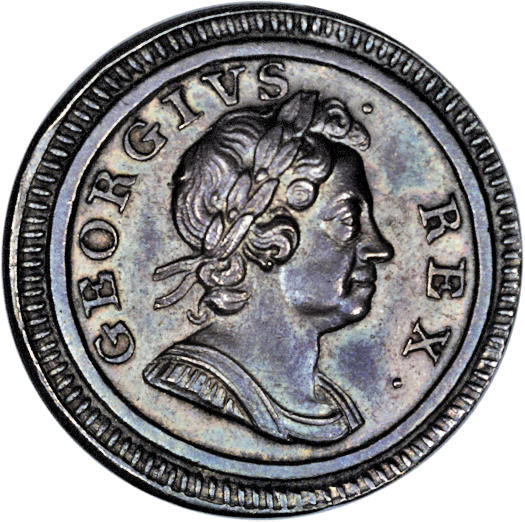
Right effigy of King George I surrounded by the inscription "GEORGIVS - REX-" (King George).This is an automatic translation. The original text is:Effigie droite du roi George Ier entourée de l'inscription "GEORGIVS · REX·" (roi George).
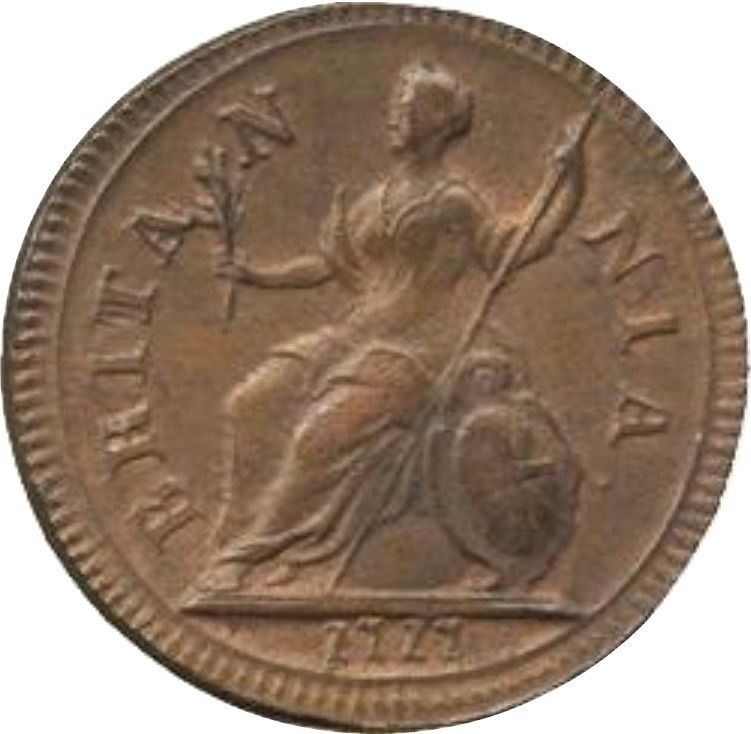
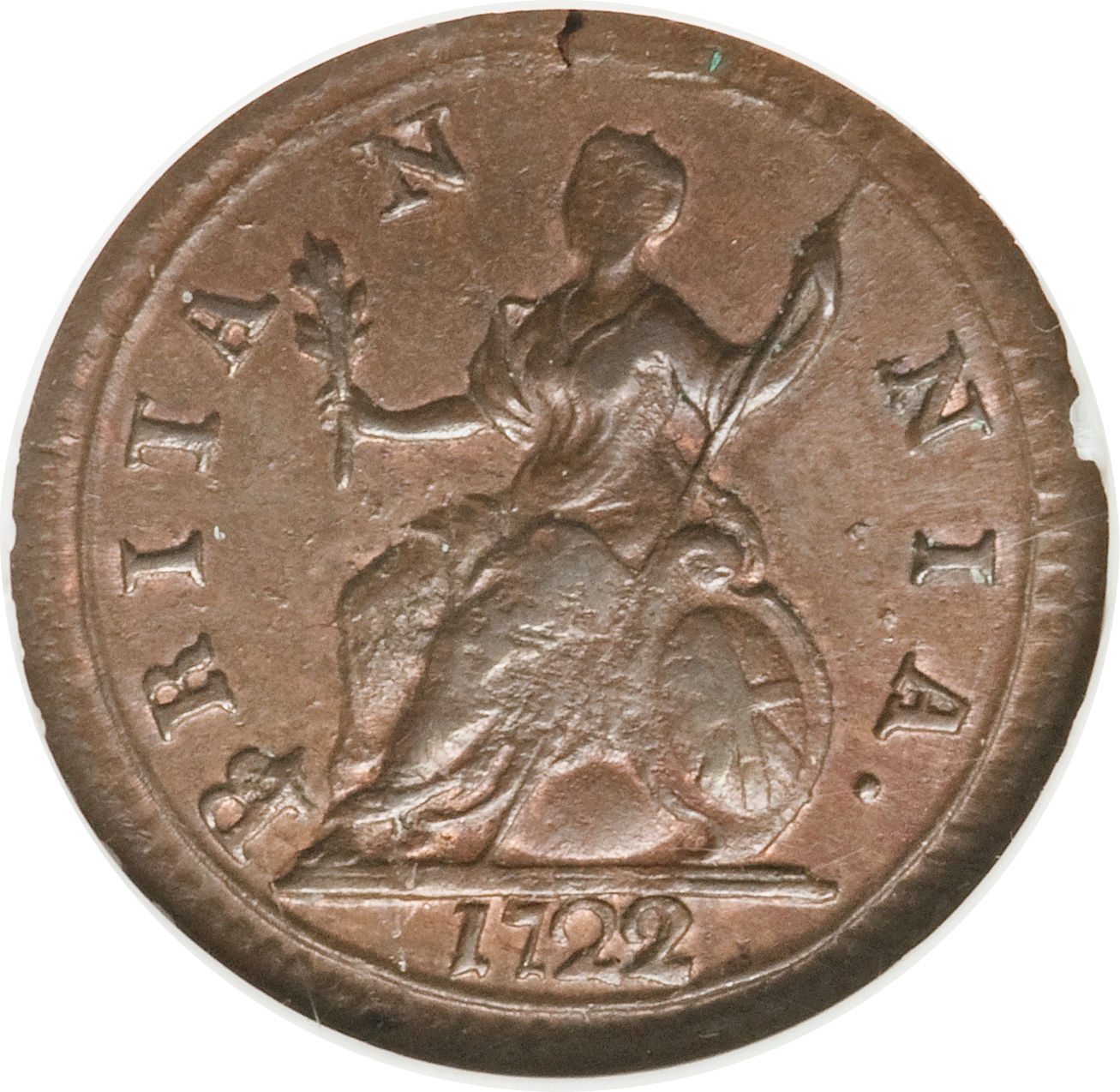
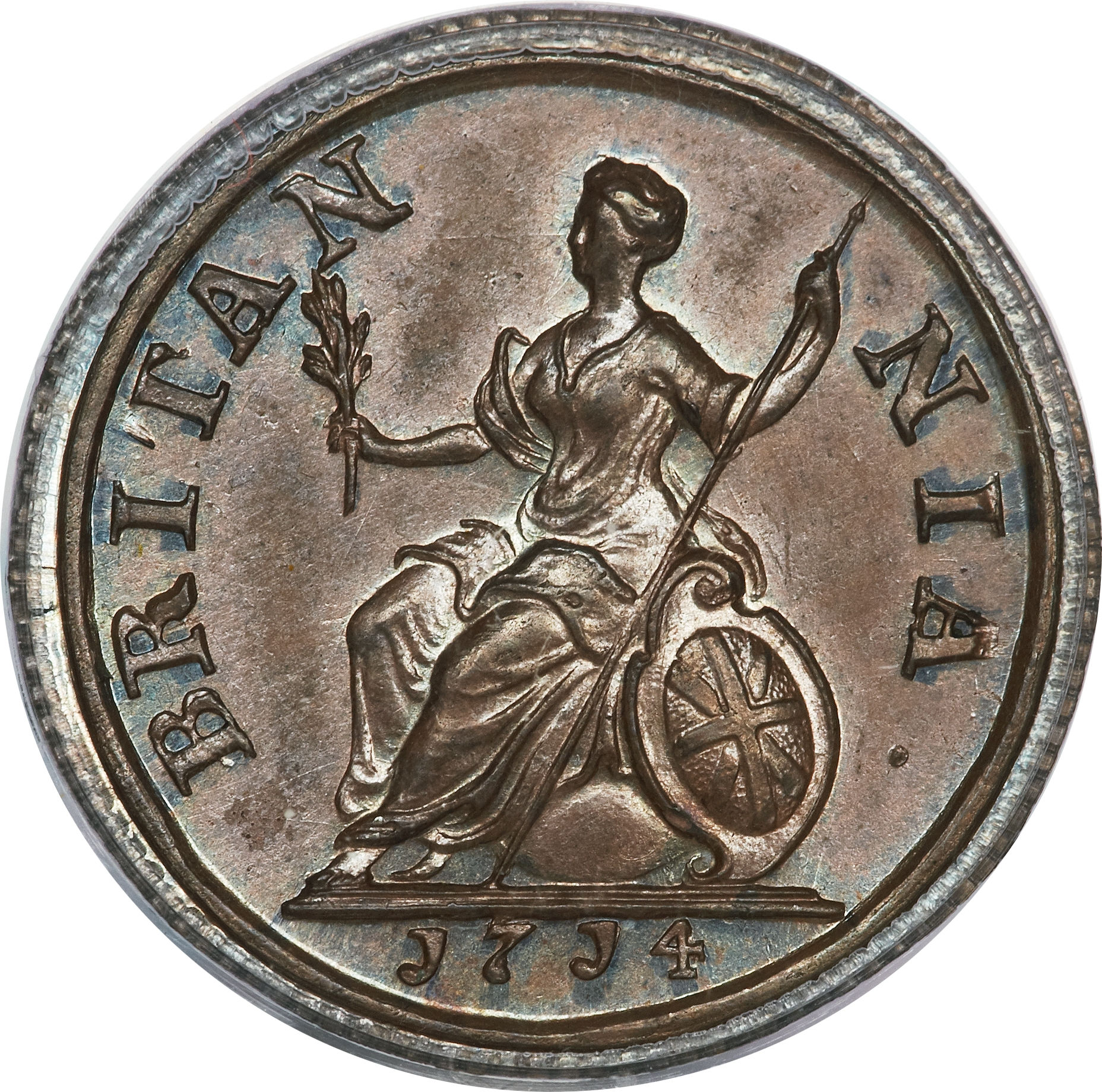
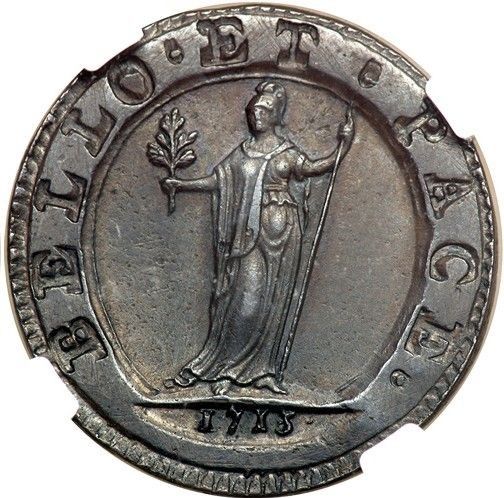
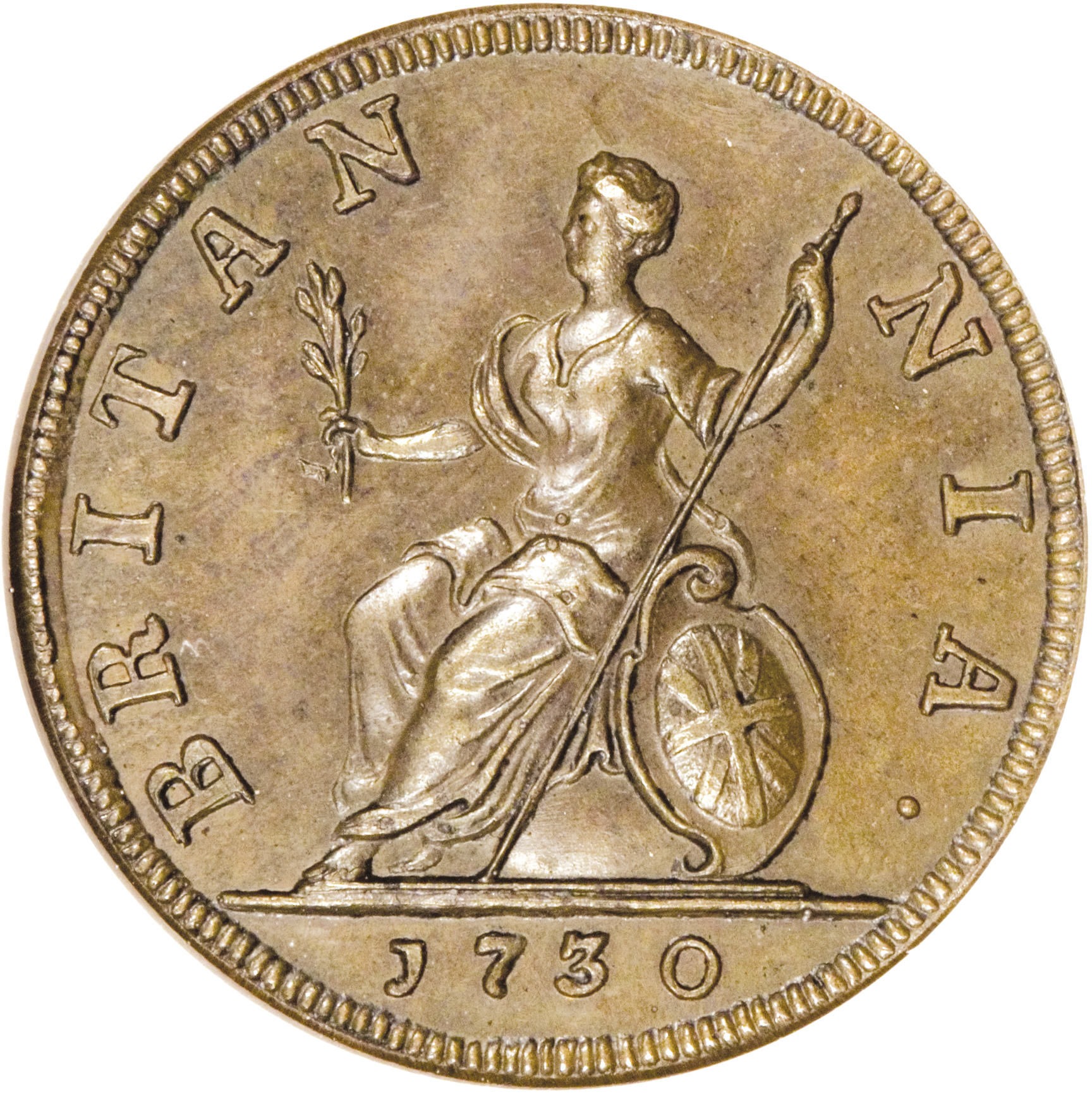
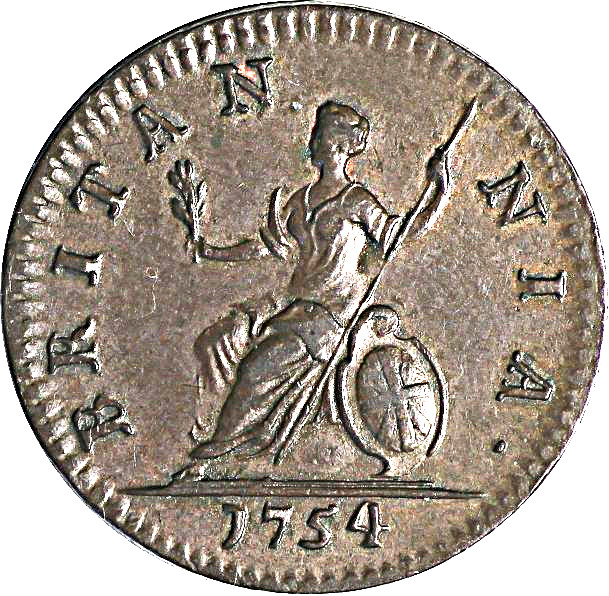
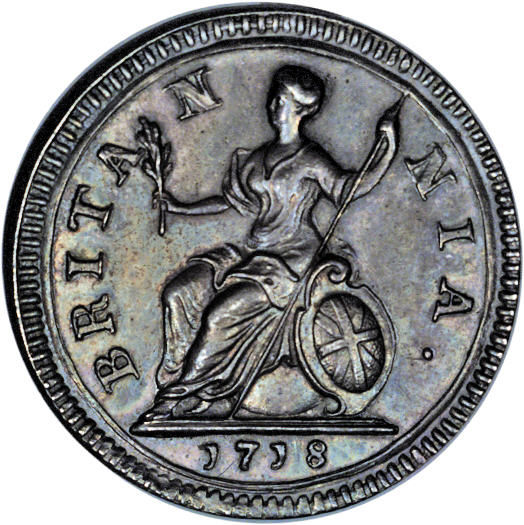
Britannia sitting to the left.This is an automatic translation. The original text is:Britannia assise vers la gauche.
Find this on eBay
Affiliate1 Farthing - George I Pattern price history
Daily limit reachedAbout the 1718 1 Farthing - George I Pattern
The 1718 1 Farthing - George I Pattern is a collector 1 farthing coin, struck in silver. Reverse design: Britannia sitting to the left.This is an automatic translation. The original text is:Britannia assise vers la gauche.
It is no longer legal tender, so its value is to collectors only.
Common questions
How much is the 1718 1 Farthing - George I Pattern worth?
No verified sale of the 1718 1 Farthing - George I Pattern has been logged on MyCoinage yet.
What is the 1718 silver farthing?
A farthing of George I dated 1718 and struck in silver, although the farthing was a copper coin. The Royal Mint Museum holds one, catalogued as a proof farthing and recorded in the Mint's 1874 and 1906 collection catalogues. It was not issued as currency.
How many 1718 silver farthings were struck?
No number struck is recorded. The documented example is in the Royal Mint Museum, which lists it under the references Peck 790, Webster 784 and Hocking 1607, and no figure for the striking is published.
Was there a copper farthing dated 1718?
Tony Clayton's farthing list and Coin Hunter both show a 1718 George I farthing with only one example known. Clayton otherwise describes the reign's farthings as the 1717 Dump issue followed by the larger flan from 1719 to 1724.
History and design
George I's copper farthings were struck in 1717 on a small, thick flan, the so-called Dump issue, and then on a larger flan every year from 1719 to 1724, according to Tony Clayton. This piece dated 1718 falls between the two issues and is struck in silver rather than the copper of the circulating coin.
The Royal Mint Museum holds an example, which it catalogues as a proof farthing of 1718 struck at the Tower. It is recorded in the Mint's own collection catalogues of 1874 and 1906 and in the accession register, and carries the catalogue references Peck 790, Webster 784, Hocking 1607 and Banks 757. No number struck is recorded.
The design follows the farthings of the reign: a right-facing bust of George I on the obverse and the seated figure of Britannia on the reverse. The Royal Mint Museum example weighs 4.66 g, has a plain edge and is struck with the two sides the same way up (die axis 360), where its currency 1717 farthing is struck with the reverse inverted.
Collecting notes
Pieces like this were not made for circulation, and with only a museum example documented any offered specimen needs careful checking: it should be silver, about the weight of the museum coin, plain-edged and dated 1718. Clayton and Coin Hunter both list a 1718 farthing with one example known, but neither says whether that coin is this silver piece.
For the circulating coins of the reign, see the 1717 Dump farthing and the larger-flan farthing of 1719 to 1724.
Sources
The history, design, varieties and collecting notes on this page are drawn from these sources. Prices come from recorded sales, not from them.
- George I proof farthing, 1718 (RMM 355), The Royal Mint Museum, via Museum Data Service (read 12 Oct 2026)
- Farthings, Tony Clayton, Coins of the UK (read 12 Oct 2026)
- Values of Farthings, Tony Clayton, Coins of the UK (read 12 Oct 2026)
- Coin values by year: 1718, Coin Hunter (read 12 Oct 2026)
More 1 Farthing coins from nearby years