Ads off, prices on.Pro is £1.99 a month or £19.99 a year: no adverts, unlimited coins, price alerts. Try it free for 7 days.Try Pro free for 7 days.
Try Pro free →
Guide
1992-1993 EU Presidency 50p: The Rarest UK 50p Ever Issued
The 1992-1993 EU Presidency 50p had a circulating mintage of just 109,000, technically
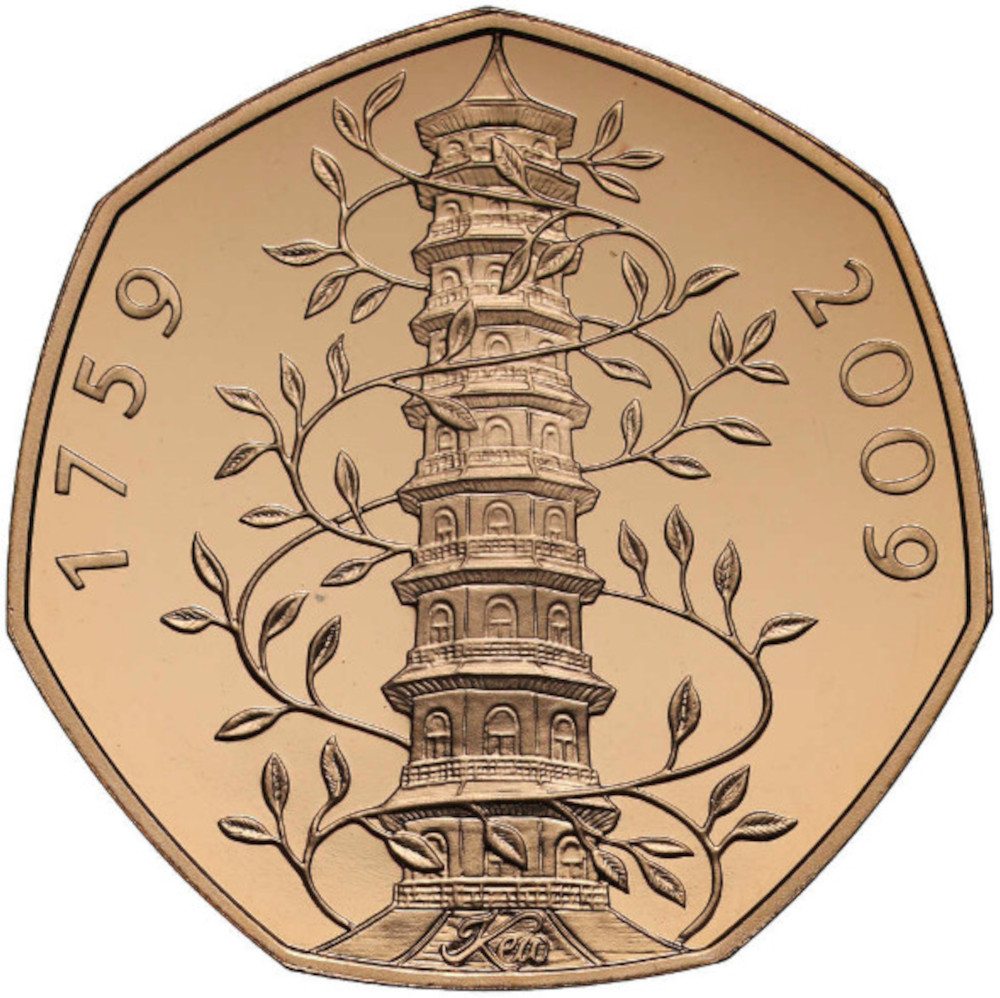
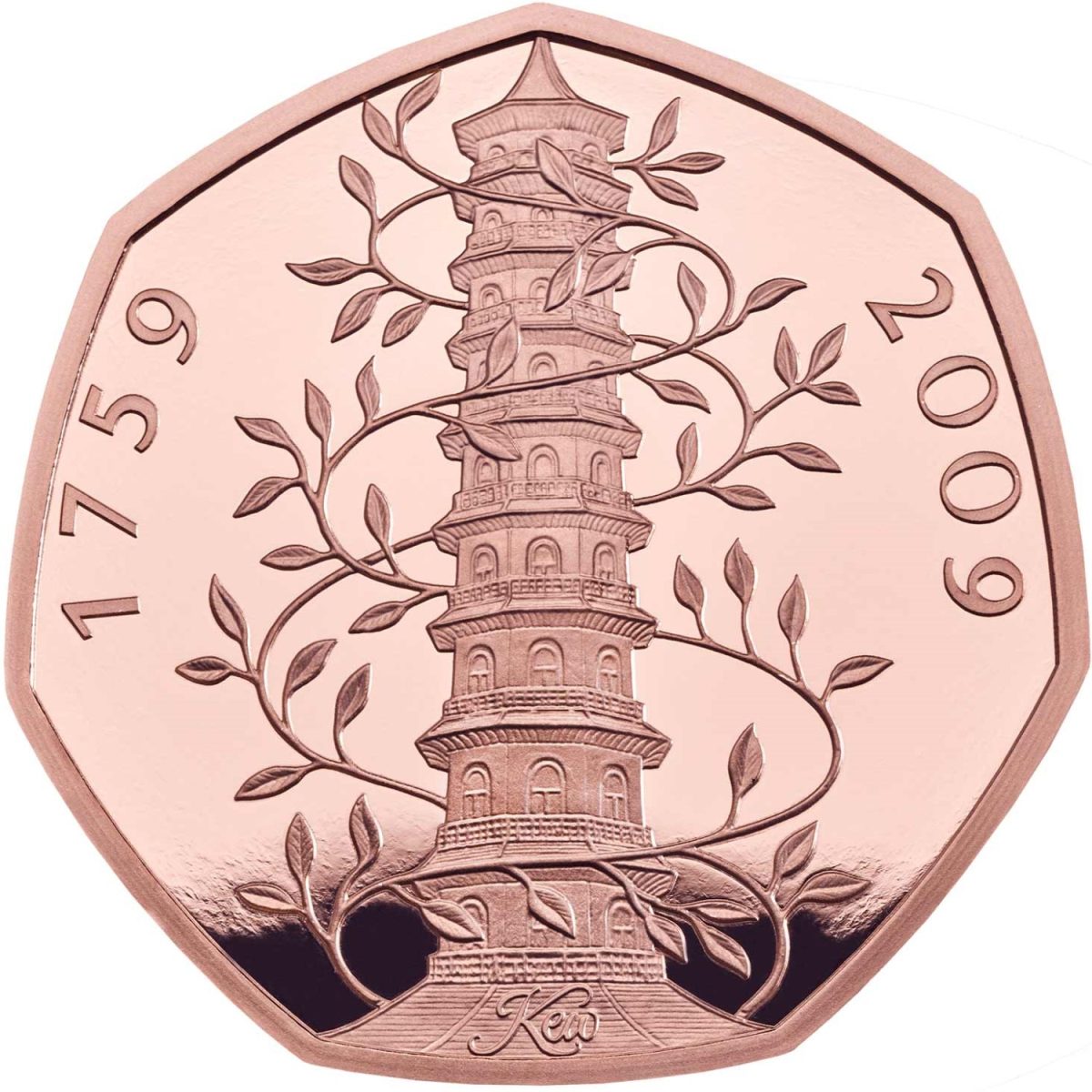
the lowest of any 50p in British history, half the mintage of the famous 2009 Kew Gardens 50p. Issued to mark
Britain's rotating EU Council Presidency and the launch of the European Single Market on 1 January 1993,
the design depicts a conference table with twelve chairs, one for each EU member state. This guide
covers prices, authentication, the format-confusion with the 1973 EEC 50p, and where to sell.
In brief. Mintage 109,000, the lowest of any UK 50p ever. Circulated grade
£30-60; BU sealed in original Royal Mint card £80-150; slabbed
MS-65+ £180-300; silver proof £120-180. Demonetised 28 February 1998
when the smaller 27.3 mm 50p was introduced; no longer legal tender. The most-counterfeited modern UK 50p
after Kew Gardens.
Watch1992-93 50p (The Rarest One) for the UK's Presidency of CoM and completion of the Single MarketThe 1992-93 EC Presidency 50p explained (All Change Review) Video: All Change Review on YouTube
Why the mintage was so low
The 1992-1993 EU Presidency 50p commemorated Britain's rotating Presidency of the EU Council (July-December 1992)
and the launch of the European Single Market on 1 January 1993. Two factors held the mintage tiny. First,
the dual-date "1992-1993" design made it suitable only for that specific Presidency window, the Royal Mint
never issued similar coins for any other UK Presidency. Second, by 1992 the original large-format
50p was nearing the end of its life: the Royal Mint had begun planning the smaller 27.3 mm replacement format
that launched on 1 September 1997. Producing a meaningful run of 1992-93 50ps in a soon-to-be-demonetised format
made no commercial sense. Just 109,000 went to circulation, against typical 50p mintages of
50-100 million.
Rarer than Kew Gardens, but lower price
The 1992-1993 EU 50p is technically rarer than the more-famous 2009 Kew Gardens 50p (109,000 vs 210,000). It commands
lower realised prices for four reasons:
Format: the 1992-93 is the older large 50p (30 mm), demonetised since 1998 and harder to display alongside modern 50p collections.
No re-issues: the Royal Mint never struck commemorative re-issues of the 1992-93 design. Kew Gardens got a 2019 silver-proof re-issue that kept the design visible to new collectors.
Cultural recognition: Kew Gardens is the public-facing rarity that mainstream press writes about; the EU 50p sits in collector-only awareness.
Demand: the EU 50p design (twelve chairs and an EC legend) carries political associations from the 2016 Brexit era that cap demand for some collectors.
The conference-table design
The reverse, designed by Mary Milner Dickens, depicts a conference table with twelve chairs, one for each EU member state at the time of issue (Belgium, Denmark, France, Germany, Greece, Ireland, Italy,
Luxembourg, Netherlands, Portugal, Spain and the United Kingdom). The table is rendered in perspective from
above, with the dual dates and a stylised "EC" inscription below. The obverse carries the third Elizabeth II
portrait by Raphael Maklouf. The design is one of the most distinctive 50p reverses ever issued and is instantly
recognisable from across a coin tray.
Authentication checklist
Check
Genuine 1992-93 EU 50p
Weight
13.5 g ± 0.1 g
Diameter
30 mm across heptagon flats
Edge
Plain (no reeding)
Reverse legend
"1992-1993 / 50 / EC" with twelve individually-defined chairs
Obverse
Maklouf 3rd portrait of Elizabeth II
The 1992-93 EU 50p is heavily counterfeited because of its high market value and low original mintage. Common
fakes include cast cupronickel pieces (slightly underweight) and modified 1973 EEC 50ps (re-engraved date, wrong
reverse). For any example trading above £100, professional grading by PCGS, NGC
or CGS UK is the safest path to authentication.
A genuine 1992-1993 EU Presidency 50p in worn circulated condition trades at £30-60. In Brilliant Uncirculated grade from a sealed Royal Mint card the same coin sells for £80-150. Slabbed PCGS or NGC graded examples in MS-65 or higher reach £180-300. The silver proof variant (mintage estimated 35,000) trades at £120-180. The 1992-93 EU 50p has the lowest circulating mintage of any 50p ever issued at 109,000, technically rarer than the famous Kew Gardens 50p (210,000) but commands lower prices because it is the older large-50p format and demand is more concentrated.
Why is the 1992-1993 EU Presidency 50p rare?
The 1992-1993 EU Presidency 50p commemorated Britain's Presidency of the European Council and the completion of the EU Single Market on 1 January 1993. The dual-date design made it a poor choice for circulation, only one coin was wanted per UK Presidency. The Royal Mint produced just 109,000 circulating examples, the lowest mintage of any 50p before or since. The original large 50p was being phased out from September 1997 (replaced by the smaller 27.3 mm format), and many of the 109,000 EU 50ps were withdrawn and melted when demonetisation began in 1998, further reducing the surviving population.
Is the 1992-1993 50p rarer than the Kew Gardens 50p?
Yes by mintage. The 1992-1993 EU Presidency 50p had a circulating mintage of 109,000; the 2009 Kew Gardens 50p had a circulating mintage of 210,000. The EU 50p is roughly twice as rare. However the EU 50p commands lower realised prices than Kew Gardens because (1) it is the older large-50p format which is harder to display alongside modern 50p collections, (2) it is no longer legal tender (demonetised 1998), (3) it has less cultural recognition, and (4) the Royal Mint never re-issued the design in collector formats the way Kew Gardens was re-issued in 2019. Net: rarer than Kew, but Kew trades higher.
Can I still spend a 1992-1993 50p?
No. The 1992-1993 EU Presidency 50p is the older large-format 50p (30 mm diameter, 13.5 g) which was demonetised on 28 February 1998 when the smaller 27.3 mm 50p was introduced. The pre-1997 large 50p is no longer legal tender. Most banks will not exchange them at face value either. They are strictly collectables now. Holding a 1992-1993 EU 50p in change today is impossible, any examples you find will be from inherited collections or out of pocket-change displays the previous owner kept.
What is on the design?
The reverse depicts a conference table with twelve chairs, one chair for each EU member state at the time. The table is rendered in perspective looking down from above, with the dual dates "1992-1993" arranged below and a stylised "EC" (European Communities) inscription. The reverse was designed by Mary Milner Dickens. The obverse uses the third Elizabeth II portrait by Raphael Maklouf. The design is one of the most distinctive of any UK 50p and is instantly recognisable to collectors who lived through the 1990s.
How can I authenticate a 1992-1993 EU Presidency 50p?
Five checks. (1) Weight: 13.5 g ± 0.1 g (the original large 50p standard). (2) Diameter: 30 mm flat-to-flat across the heptagon. (3) Edge: plain (no reeding); 50ps were never milled. (4) Reverse detail: twelve chairs around the conference table should be individually defined; the EC legend should be sharp. (5) Both dates visible: "1992-1993" in tight kerning. The 1992-1993 EU 50p is one of the most-counterfeited modern UK coins because of its high market value and low original mintage; for any example trading above £100, professional grading by PCGS, NGC or CGS UK is recommended.
How can I tell if mine is BU or circulated?
Run two tests. Lustre: a BU coin retains full mint lustre on the conference-table relief and around the rim, a near-mirror sheen. A circulated coin shows duller, satin-finish surfaces from handling. Edge wear: a BU coin has crisp seven-sided edges with no rounding; a circulated coin shows softening and small marks. Original packaging: BU examples in original Royal Mint cards (cellophane-sealed yellow card with a description leaflet) are the highest-grade examples and trade at £80-150. Loose BU coins removed from cards trade at £60-100. Circulated examples at £30-60.
Where should I sell a 1992-1993 EU Presidency 50p?
For a circulated example worth £30-60: eBay UK with sold-listings cross-check. For a BU sealed in original Royal Mint card worth £80-150: same venue. For high-grade slabbed examples worth £180+: consign to Spink, Baldwin's or Noonans for the strongest realisation. Avoid Westminster-style direct-mail buyers and pawn shops; both consistently undervalue collector coins. See our where to sell rare coins UK guide.
Why is the 1992-1993 EU 50p sometimes called the "1973 EEC 50p"?
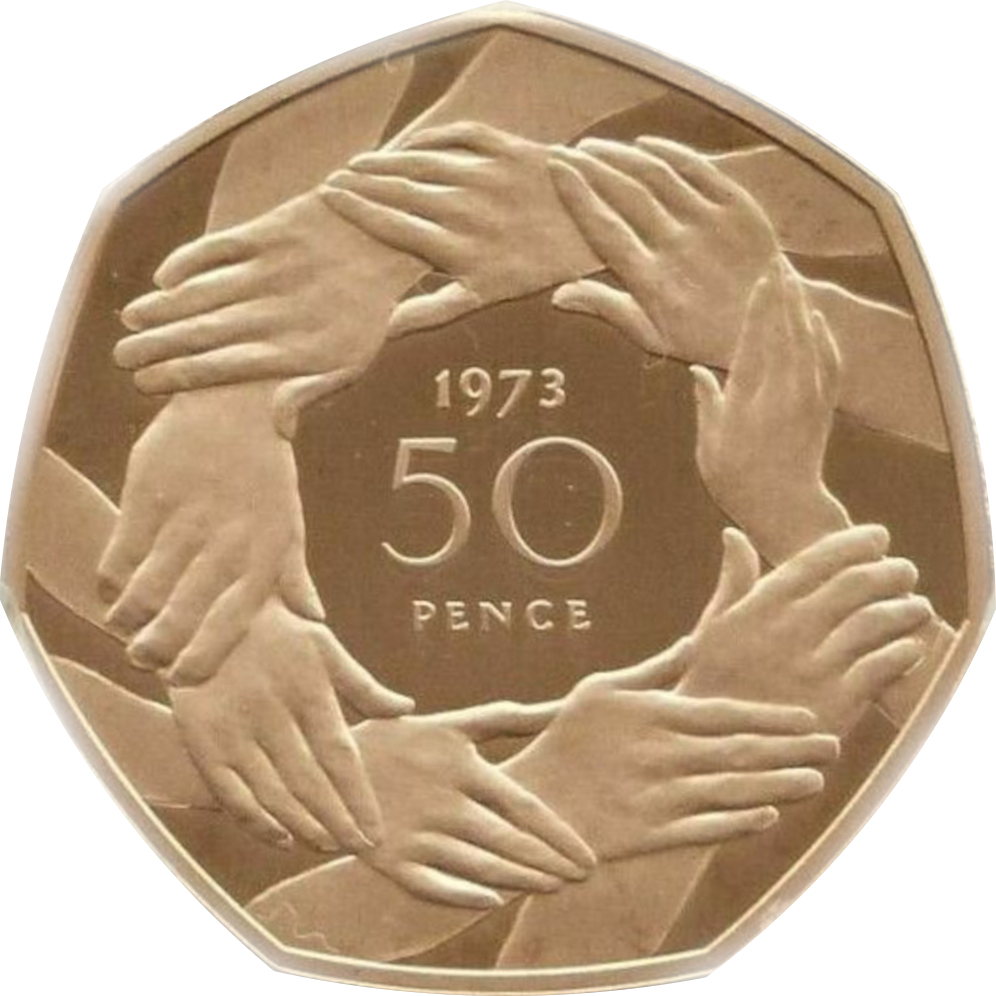
They are different coins, often confused. The 1973 EEC 50p commemorated Britain's entry into the European Economic Community on 1 January 1973; designer David Wynne; mintage 89,775,000, one of the most common commemorative 50ps ever. Worn examples are worth face value; BU in original Royal Mint pack £3-8. The 1992-1993 EU Presidency 50p commemorated Britain's rotating EU Council presidency 20 years later; mintage 109,000, the lowest of any 50p ever. Worth £30-150+. The two coins look completely different (handshake vs conference table) but both reference the European Communities.
Are there silver proof or gold proof variants?
Yes. The Royal Mint struck a silver proof 1992-1993 EU Presidency 50p for the silver proof annual set (mintage estimated 35,000). The silver proof contains 13.5 g of .925 sterling silver and trades at £120-180. There is no gold proof variant for this coin, gold proof 50ps did not become a regular Royal Mint format until later in the 1990s. The silver proof is sealed in a Royal Mint clamshell case and is the most-collected non-circulating 1992-93 50p variant.
What event did the 1992-1993 50p commemorate?
Two events. (1) The UK's Presidency of the Council of the European Communities (the rotating six-month role) which the UK held in the second half of 1992. (2) The completion of the EU Single Market on 1 January 1993, which created free movement of goods, services, capital and people across the then-twelve member states. The dual-date "1992-1993" on the reverse references both events. The twelve chairs around the conference table represent Belgium, Denmark, France, Germany, Greece, Ireland, Italy, Luxembourg, Netherlands, Portugal, Spain and the United Kingdom, the 12 EEC member states at the time of issue.
Did Brexit affect the 1992-1993 50p's value?
Marginally and somewhat counter-intuitively. After the 2016 Brexit referendum, the 1992-1993 EU Presidency 50p saw a brief surge in collector interest as the historical artefact of UK-EU integration suddenly carried renewed cultural significance. Realised eBay prices climbed roughly 15-25% in the 2017-2019 period as some buyers acquired examples specifically for their now-poignant historical context. By 2024 prices had stabilised back to fundamentals (mintage scarcity + grade premium). The political associations have capped demand from some collector segments but not eliminated it; the underlying scarcity (109,000 mintage) remains the dominant value driver.
We use cookies to keep you signed in, a first-party cookie to see how the site is used, and Google Analytics.
No thanks turns off our own record; you can change it any time in your account.
Cookie Policy