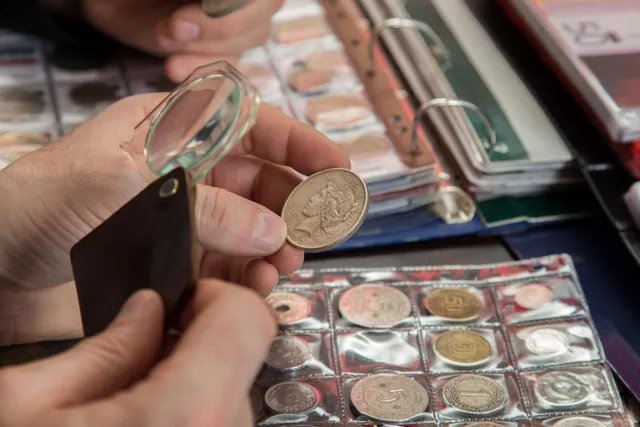
Coin collecting has a reputation as an expensive hobby, but the truth is that most British collectors start with what's in their change jar and a £20 budget. The genuinely interesting coins, the Kew Gardens 50p, the 1933 farthing, the Olympic Football 50p, are accessible to anyone willing to look properly. Here's how to build a meaningful UK coin collection without breaking the bank.
Step 1: Empty every change jar in the house
Before buying a single coin, pull out every £1 jar, 50p tin, and forgotten coat-pocket pile in the house. Modern UK circulation contains, at any given time, at least 40 commemorative 50p designs, 30+ £2 designs, the full 1p-£2 Charles III definitive set, and a meaningful chance of finding a sub-1-million mintage rare. The Olympic Football 50p (mintage 1,125,500) and Kew Gardens 50p (210,000) both still surface in change occasionally; the 2017 Sir Isaac Newton £2 (mintage 1,801,500) is one of the easier modern £2 rarities to find this way.
You're collecting these coins anyway, just from your own till. Use Change Checker's scarcity index or our rare UK coins list to know what you're looking at as you sort through.
Step 2: Pick a thematic focus, not "UK coins"
"I collect UK coins" is too broad to be useful. Pick a tight theme and you'll learn fast and spend efficiently. Five focuses that work well for beginners:
- Modern commemoratives. Olympic 50ps (29 designs from 2012), Beatrix Potter 50ps (8 designs 2016-2018), Paddington (so far four issues), Harry Potter (eight at the time of writing). Target: one of each at £3-10 per coin in circulated grade. Total cost for a comprehensive Olympic set: £80-150.
- One monarch, every denomination. Pick a reign and collect 1p, 2p, 5p, 10p, 20p, 50p, £1, £2 across that monarch's rule. Elizabeth II 4th portrait (1985-1997) is a popular and affordable choice; George VI (1937-1952) is a step up at moderate cost; Edward VII (1901-1910) is the classy mid-tier option.
- One denomination across history. Shillings 1816-1970, crowns from Victoria to Charles III, 50ps 1969 to present. Date-run collections are intellectually satisfying and easy to track progress on.
- One series. The Britannia bullion £2 (1oz fine silver, 1997 onwards), the Mr Men £5 series (2021-2024), or the Beatrix Potter 50ps. Series have a defined finish line.
- One country's pre-decimal silver. Florins, half-crowns and shillings of any pre-1947 (sterling) or 1920-1946 (.500 fine) era. The bullion floor protects your downside; collecting grade-by-grade gives you a goal.
Step 3: Where to actually buy at sensible prices
Avoid eBay "Buy It Now" listings as a first move, you'll typically overpay 30-100% for a beginner-grade coin. Better venues:
- eBay UK auctions, sold-listings filter. Filter to "Sold" listings, sort by "Most Recent" (NOT "Highest Price" which shows outliers), and you'll see what coins actually realise. Bid on auction-format listings with a hard ceiling at the median realised price. Combine with "Used" condition filter to remove the BIN-listing noise.
- Local coin fairs. The London Coin Fair (Holiday Inn Bloomsbury, six times a year), the Midland Coin Fair (Birmingham), and BNTA-affiliated regional events. Dealers often have £1-£5 trays of circulated material that's perfect for beginner date runs. Search "BNTA coin fair near me" for upcoming dates.
- Royal Mint direct. Brilliant uncirculated year packs at £10-15 cover 5-8 coins each year and come in original Royal Mint packaging. Subscriptions are NOT a good first move, pay-per-issue keeps you free to skip releases you don't care about. See our Royal Mint subscription review.
- Car boot sales and charity shops. Genuine sleeper finds: Victorian pennies for 50p each from non-collectors, occasional pre-war silver for under £5, and the rare BU set in grandparent-era family clearouts. Bring a 10x loupe.
- Coincraft, Lockdales, BNTA dealers. Established UK retailers carry deep stock of affordable circulated material. Prices are 10-30% above eBay realised but with authenticity guarantee and consistent grading.
A sample £50 starter collection
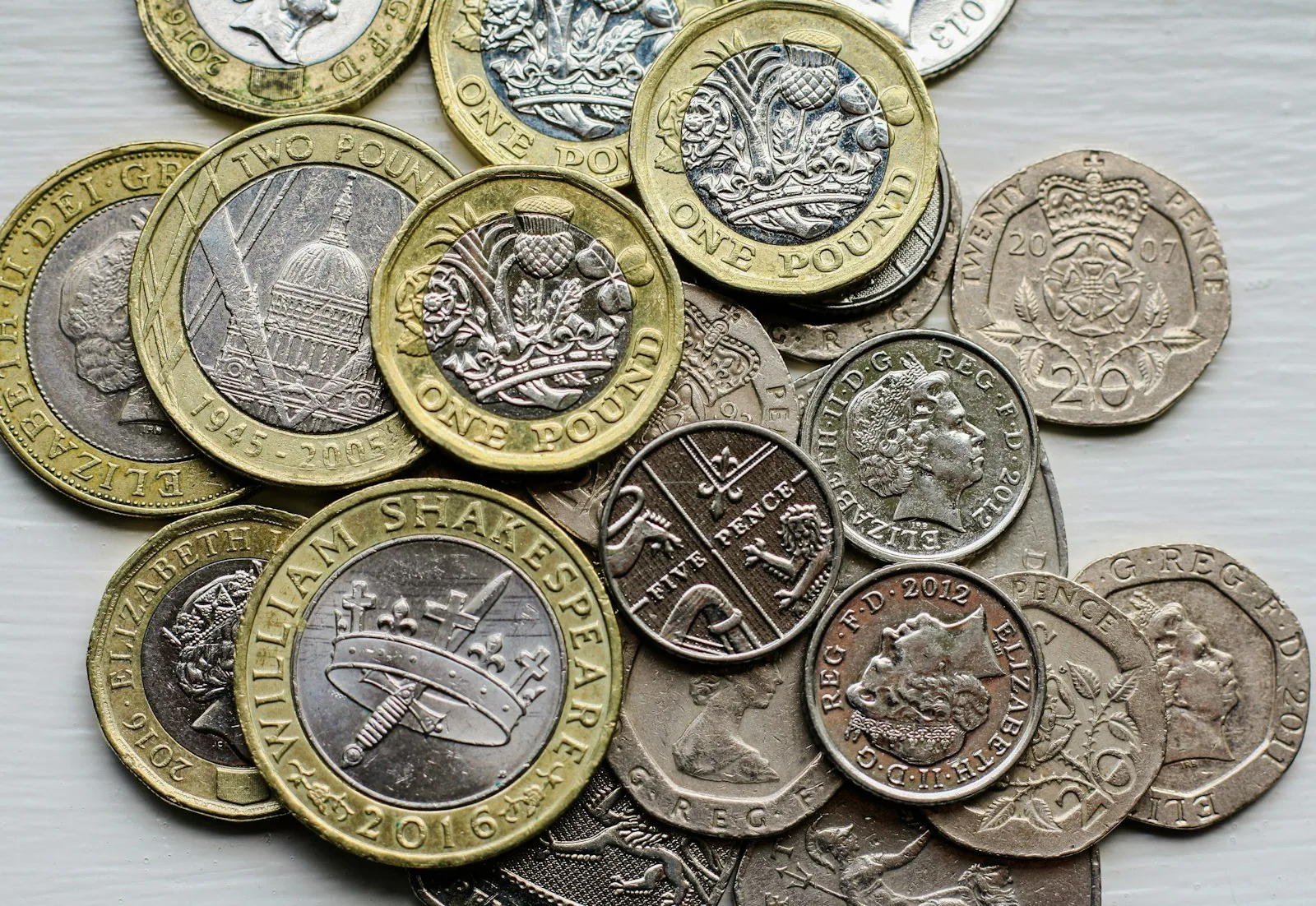
| Item | Cost |
|---|---|
| 5x circulated rare 50ps (e.g. Kew alternates, Olympic variants, Paddington) | £30 |
| 2x Victorian pennies in Fine grade | £8 |
| 1x George V half-crown (.500 silver) | £7 |
| Coin album with mylar protective sleeves (Lighthouse / Westminster) | £5 |
| Total | £50 |
Eight coins across three reigns, organised in protective storage, for under fifty quid. Grow from there.
What NOT to buy in the first six months
- Gold coins. Sovereigns are lovely but a single full sovereign costs £400-500 at bullion floor, that's your entire learning budget gone. Save them for year two or three when you can value-judge them properly.
- Slabbed coins (PCGS / NGC / CGS UK). Graded encapsulated coins carry 10-25% premium over raw equivalents. Unnecessary at beginner price points and the slab premium isn't recovered when you sell as a collection.
- "Job lot" purchases. Mixed bulk lots on eBay rarely contain anything scarce, if there were, the seller would have picked it out. Better to buy specific coins you've identified as wanted.
- Anything with the word "rare" in the listing title. Genuine rarities don't need to advertise themselves; the word is almost always a red flag for an overpriced common coin.
- Westminster Collection / Bradford Exchange direct mail. See our explainer. Their products are decorative medals, not investment-grade Royal Mint coins.
Tools you'll want from the start
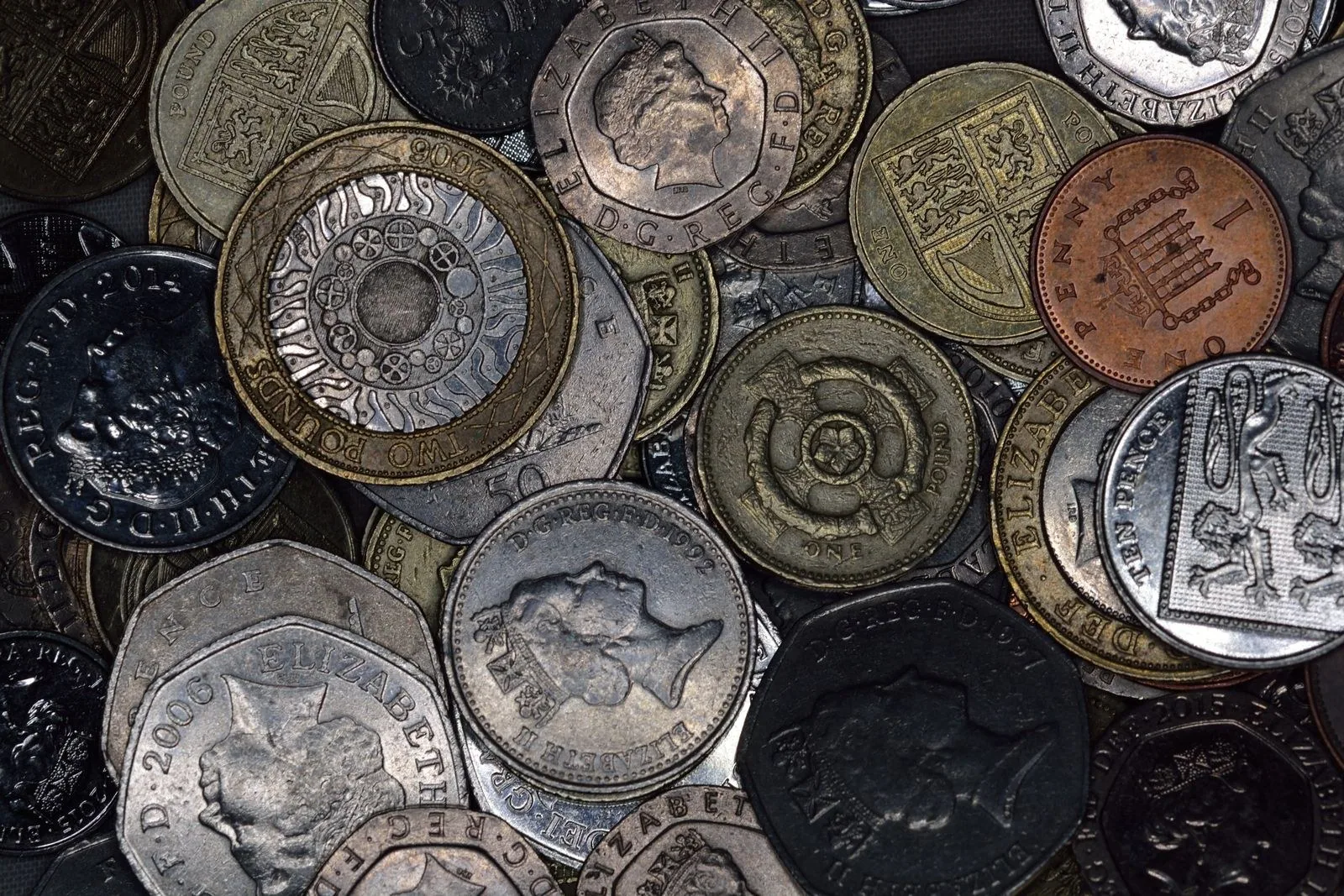
- 10x jeweller's loupe. £5-10 on eBay. Essential for grading and authentication detail.
- Digital scale, 0.01 g resolution. £15-25. Catches more counterfeits than any other single tool.
- Cardboard 2x2 flips with mylar. £8 per 100. Standard short-term storage.
- Coin album with mylar pockets. £5-15. Long-term organisation for circulated material.
- A reference book. Spink's "Standard Catalogue of British Coins" (~£25 paperback) is the trade standard; cheaper alternatives include "Coin Yearbook" (Token Publishing) or Krause's World Coins.
The first-year roadmap
Most new collectors give up between months 6 and 12 because they ran out of progress. A staged plan helps:
- Months 1-3: empty every coin jar, identify what you have, pick a focus, buy the storage. No purchases yet beyond storage.
- Months 3-6: attend two coin fairs and buy 8-15 coins in your chosen focus. Total spend £50-150.
- Months 6-12: add 20-40 more coins via eBay sold-listing-watching and one Royal Mint BU year set. Total spend £100-300. Start tracking with MyCoinage or a spreadsheet to know what you've got.
- Year 2+: upgrade individual key coins by replacing circulated with EF or BU; consider starting a second focus; budget for one auction lot £200-500 in a specific area you've learned to value.
Coin collecting rewards patience over money. The collectors who've assembled six-figure collections typically did it slowly across decades, buying the right coin when it appeared rather than the available coin at any given time.